Table of Contents
ToggleCape Town Traffic 2026: Is It Time to Revisit Hovercrafts from Blouberg?
Living in Cape Town has many positives — but for the working class, the daily commute has become a nightmare. According to the 2025 INRIX Global Traffic Scorecard, Cape Town is ranked the 6th most congested city in the world, with the average driver losing 96 hours (four full days) per year stuck in traffic. This is worse than London (91 hours) and places Cape Town ahead of many major international cities.
The situation is getting worse, not better. And with only two major roads leading out of the city, a natural disaster on the Milnerton Fault could be catastrophic.
Why Cape Town traffic 2026 Needs Water-Based Solutions
The Hovercape Proposal – A Missed Opportunity?
In the early 2000s, a company called Hovercape proposed a practical hovercraft commuter service between Big Bay in Blouberg and the V&A Waterfront. The plan involved large hovercraft making the crossing in about 25 minutes.
The authorities rejected or stalled the idea, mainly citing Cape Town’s weather as unsuitable. More than twenty years later, with Cape Town traffic 2026 worse than ever, it’s worth asking whether this idea should be revived with modern technology.
The Famous KFM Plane vs Car Challenge
Many years ago, local radio station KFM ran a memorable competition. A Mango 737 took off from Cape Town International Airport bound for Johannesburg. At the same time, three drivers set off on different routes — the N1 corridor, the Southern Suburbs (M3/N2), and the West Coast route (R27) — to see who could reach Johannesburg first.
From what I remember, the drivers on the N1 and Southern Suburbs routes only just managed to beat the aircraft, while the West Coast driver didn’t make it in time. This stunt perfectly illustrated how bad traffic had already become on the N1.
I drove the N1 for 26 years. I had to leave home at 05:00 to get to work by 05:30 (a 30-minute trip). If I left at 06:30, the same journey could easily take up to 2 hours.
Hovercrafts Thrive in Rough Conditions
Hovercrafts were invented by Sir Christopher Cockerell specifically to handle rough water. They ride on a cushion of air and perform exceptionally well in choppy conditions.
Successful operations in places like Hong Kong and the United Kingdom prove that hovercrafts can operate reliably even in challenging weather. Cape Town’s Table Bay conditions are not uniquely worse.
Scooters Help — But Weather Is Still an Issue
As we discussed in our previous article on motorcycles South Africa 2026, scooters offer an excellent workaround for many. However, Cape Town’s winter rain, strong winds, and southeasters make two-wheeled commuting unpleasant and sometimes dangerous.
Water-based transport could provide a far more comfortable all-weather alternative.
Hover Travel GH-2114 operating between Southsea and Ryde during heavy weather. later that day the service was suspended.
The Disaster Evacuation Risk
Cape Town residents regularly hear the Koeberg siren tests, but very few have ever been properly trained on what to do in a real emergency.
In a magnitude 8 earthquake near Koeberg Nuclear Power Station that causes a radioactive release, residents in the Milnerton area would have only three primary road escape routes:
- Route 1: N1 Highway (East/South-East) → Towards Northern Suburbs and Paarl. This is often the safest direction depending on wind, yet it is also the most congested roadway in Africa.
- Route 2: M5 Corridor (South) → Into the Southern Suburbs and N2.
- Route 3: Marine Drive / R27 (South) → Into the CBD and Atlantic Seaboard.
Critical Dangers
The Koeberg Interchange is highly vulnerable to collapse. Soil liquefaction in low-lying areas could make roads impassable. Wind direction would also determine whether fleeing south drives people directly into the radioactive plume.
This highlights a major weakness in Cape Town traffic 2026 — even the best escape route is already severely congested during normal peak hours. In a real panic, gridlock would be catastrophic. While hovercrafts are excellent for daily commuting, they would offer limited help in this type of emergency.

New World First Ferry Services Limited is a ferry service company in Hong Kong. The company was established in November 1999, when it took over the 8 licensed ferry routes transferred from the Hongkong and Yaumati Ferry.[1] It is jointly owned by Chow Tai Fook Enterprises Limited and NWS Holdings Limited.
When the company commenced its service on the 2000-01-15, it bought 14 ferries and rented 7 hovercraft and catamarans from its predecessor. Since then it introduced 10 fast vessels on Outlying Islands routes to phase out the rented vessels and to improve services.
It operates the following routes:
   Central to Cheung Chau and Mui Wo
   Circular between Peng Chau, Mui Wo, Chi Ma Wan, and Cheung Chau
North Point to Hung Hom and Kowloon City.
Final Thoughts Cape Town’s traffic crisis needs bold, creative solutions. The Hovercape idea from the early 2000s may have been ahead of its time. With modern technology and worsening congestion, it deserves fresh consideration.
The working class of Cape Town deserves better ways to get to work without losing days of their lives every year in traffic.
Solving Cape Town traffic 2026 will require more than just building more roads.
At Parts-Ring, we support practical solutions that help everyday drivers and riders. Whether you commute by scooter, motorcycle, or car — we’ve got the quality parts you need.
Contact Parts-Ring today for expert advice and dependable spares.
Parts-Ring – Quality Parts, Reliable Service.
Further Reading
- Cape Town warned to prepare for earthquake – IOL (2004)
- Koeberg station next to geological fault – OFM (2011)
- Parts-Ring – Motorcycles South Africa 2026: The Affordable Transport Revolution Most Missed
- Parts-Ring – Chinese Cars in South Africa – Opportunity or Risk for Parts & Maintenance?
- Parts-Ring – How the South Korea China Auto Industry Turned the Auto Industry on Its Head: The Three Waves of Disruption
- Parts-Ring – Ford South Africa
- Parts-Ring – Nissan Downward Spiral: Why One of Japan’s Biggest Carmakers Is Fighting for Survival in 2026
- Parts-Ring – British Car Industry Downfall: The Rise and Fall of a Manufacturing Empire
Technical Research & Image Credits
- Featured Image – Hovercraft ferry between Portsmouth and Isle of Wight. publicdomainpictures.net CC0 Public Domain – Author: Petr Kratochvil
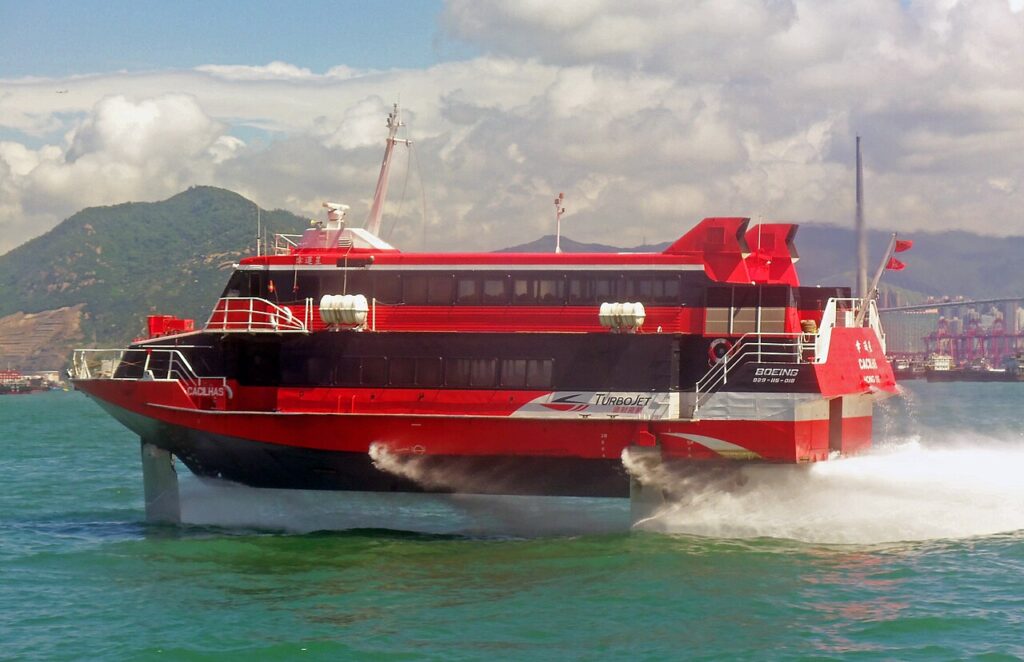
- TurboJet hydrofoil Cacilhas in Hong Kong harbor, seen from a Hong Kong ferry as it passes by. This file is licensed under the Creative Commons Attribution-Share Alike 3.0 Unported license. Author Daniel Case
- Ferry Services Hong Kong. This file is made available under the Creative Commons CC0 1.0 Universal Public Domain Dedication. Author Bernard Spragg. NZ
- Research: Technical assistance and cross-referencing provided by Grok xAI.
- Editorial: All case study data, circuit designs, and final editorial decisions are the sole responsibility of the author to ensure technical accuracy.
[…] Parts-Ring – Cape Town Traffic 2026: Why Hovercrafts and Water Transport Could Solve the Gridlock […]