Beyond the A+ Certificate: Where to Get Real-World Skills for Technical Sales & Service Success
In Part 1 we established that the hybrid technical-sales profile usually wins in complex fields like solar, servers, professional audio, maritime, and aviation.
But here’s the reality check: many people chase quick certifications thinking that’s enough. They do their CompTIA A+ (which is solid for basic hardware troubleshooting), pat themselves on the back, and then get blindsided when the real problems hit — software conflicts, system integration headaches, customer expectations in load-shedding conditions, or explaining ROI on a R150,000 solar installation.
I’ve seen it too many times. A+ teaches you how to swap a hard drive or diagnose a dead power supply. It doesn’t prepare you for the messy reality of configuring a server rack that refuses to talk to legacy software, or standing on a client’s roof in the Highveld dust explaining why one inverter will survive voltage swings better than another. The true skillset for technical sales and service runs much deeper.
So where do you actually build the hybrid skills that matter? Not just theory, but hands-on floor time combined with the ability to communicate value honestly.
Table of Contents
ToggleWhy Basic Certs Alone Aren’t Enough
CompTIA A+ (and similar entry-level quals like N+) give you a good foundation in hardware. That’s useful. But in the industries we’re talking about, the biggest headaches are rarely pure hardware failures anymore.
It’s software configuration, compatibility issues, network integration, local operating conditions (voltage fluctuations, dust, heat, power cuts), and — most importantly — translating all that technical knowledge into language a customer can trust and act on.
A pure hardware tech might fix the box. A hybrid rep can fix the box and sell the right long-term solution without overselling or underselling. That difference shows up in customer loyalty and your bank account over time.
The Gold Standard: Hands-On Floor Time First
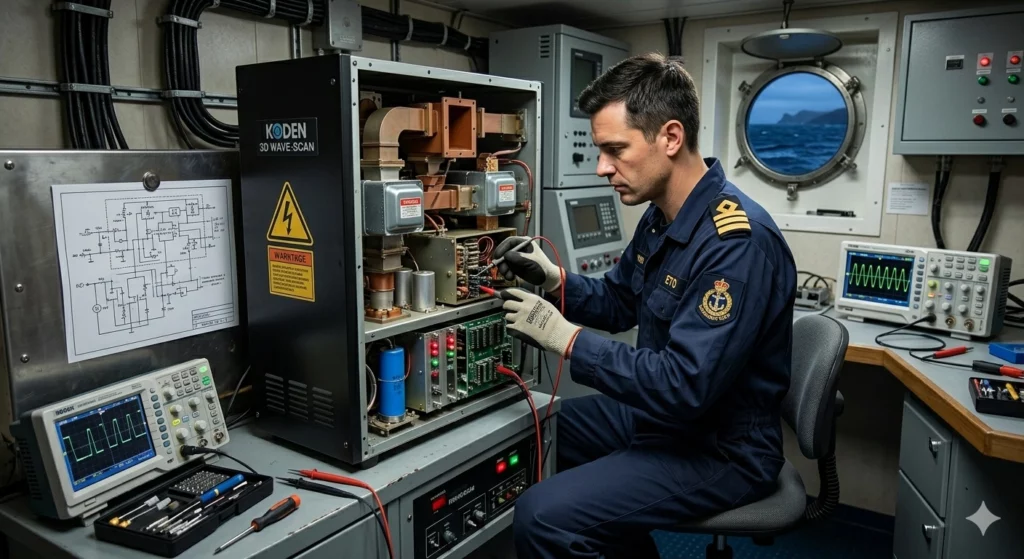
My rule from the marine and navigation days still holds: spend serious time on the engineering floor before you think about moving into sales or customer-facing roles. Five years wasn’t arbitrary — it gave you the scars, the shortcuts, and the deep understanding of what actually fails and why.
In high-stakes environments, customers can smell inexperience. They want someone who’s been there when the radar went down at 3 a.m. or when the solar system tripped during a thunderstorm.
Apprenticeships and structured on-the-job training beat classroom-only courses every time. Theory is important, but nothing replaces turning spanners, tracing faults, and dealing with real equipment day after day.
.
Best Training Routes in South Africa (and Beyond)
Here are practical, proven pathways depending on the field you want to specialise in:
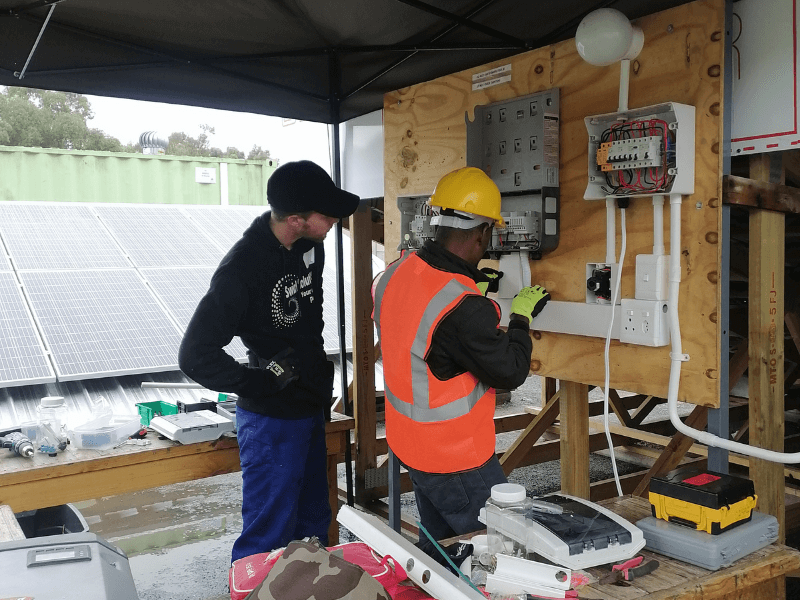
Solar PV (one of the hottest sectors right now): Start with hands-on programmes that combine theory, design, and installation.
- GREEN Solar Academy offers excellent practical courses including the 5-day SuperSolarSchool / PV GreenCard training (available in Johannesburg, Pretoria, Cape Town, Ballito/Durban, and Port Elizabeth). It’s endorsed by SAPVIA and focuses on real system sizing, installation, and compliance under South African conditions.
- SARETEC (South African Renewable Energy Technology Centre) provides solid Solar PV Installer courses, including online options and practical assessments for the PV GreenCard. These programmes give you both the technical depth and the ability to speak confidently about ROI and payback — crucial for the sales side.
Maritime and Navigation: Look for proper apprenticeship programmes. Sandock Austral Shipyards runs one of the largest apprentice training schemes in the marine industry, covering trades like fitting, electrical, and boiler making. It’s hands-on and addresses the real skills shortage in South African shipyards and repair facilities. SAMTRA (South African Maritime Training Academy) in Simon’s Town also offers simulator-based training for navigation, engine room, and communications systems. Cape Peninsula University of Technology has a degree course at the Granger Bay faculty, Maritime Studies.
Aviation: South African Airways Technical (SAA Technical) has long offered structured apprentice training programmes in aircraft maintenance trades. These are competency-based with a heavy practical component — exactly the kind of floor time that builds credibility.
Professional Audio: Institutions like SAE Institute (Cape Town and Johannesburg), Cape Audio College, Academy of Sound Engineering (ASE) in Johannesburg, and CAE College offer diplomas and certificates in sound engineering and live sound reinforcement. These combine technical electronics with practical mixing, system setup, and troubleshooting — skills that translate directly into credible technical sales for amps, speakers, and installation work.
Servers, IT Infrastructure & Computers: After A+, move into vendor-specific or advanced infrastructure training. Look at network/server technician courses through providers like Learnfast or School of IT. For deeper integration skills, consider programmes covering virtualization, cabling, and system administration. The real edge comes from on-the-job experience in data centres or with installers who deal with legacy + new system compatibility.
Adding the Sales Layer: Once you have solid technical grounding, layer on professional selling skills. SalesGuru in Johannesburg offers strong sales and sales management training tailored for technical and B2B environments. They cover objection handling, consultative selling, and virtual selling — all useful when you’re explaining complex solutions to budget-conscious South African customers.
Many manufacturers also run their own product-specific training (inverters, marine electronics, pro audio gear, hardware category engineers visit distributors to supply training). These are often low-cost or free once you’re employed and give you the exact knowledge needed to sell that brand honestly.
Balancing Technical Depth with Sales Ability
The best hybrids don’t stop learning. They combine:
- Years of practical repair and installation experience
- Ongoing manufacturer or industry-specific technical updates
- Targeted sales training that teaches how to communicate value without hype
In South Africa this mix is particularly powerful. Customers have been burned too often. They respect someone who can say, “This option is cheaper but won’t handle your voltage swings — here’s why the better one will save you money long-term.”