Table of Contents
ToggleTape Recorder Heads Servicing - A sequel to The Otari Range of Reel Tape Recorders
As our previous article “The Otari Range of Legendary Reel to Reel Tape Recorders”we decided to rather move the magnetic heads of tape recorders under the Tape Recorder Heads Servicing because of the vast interest. This is 15 part FAQ. Hopefully our readers can take something from this.
1. What Are Tape Heads? (Alternative Names and Basics)
Tape heads (also called magnetic heads, record/playback heads, or simply heads) are electromagnetic transducers that convert electrical audio signals into magnetic patterns on tape (recording) and vice versa (playback). They are the heart of any analogue tape machine.
In a head stack, you typically see:
- Erase head (first in the tape path).
- Record head (sometimes combined with playback).
- Playback head (last).
2. How Does the Playback Head Work?
The playback head works on electromagnetic induction (Faraday’s law). As magnetized tape passes over the narrow gap in the head’s core (a coil wrapped around ferromagnetic material like permalloy, ferrite, or sendust), the changing magnetic field induces a tiny alternating current in the coil. This weak signal is amplified into audible sound. Narrower gaps improve high-frequency response.
3. How Does the Erasing Head Work?
The erase head clears previous recordings by applying a strong, high-frequency alternating magnetic field that randomizes the tape’s magnetic particles. It usually has a wider gap (or dual gaps) than record/play heads so the tape stays in the field longer for thorough erasure. Most quality machines use AC erase (from the bias oscillator); cheap cassette decks may use a permanent magnet erase head that swings into contact only during recording.
Why permanent magnets are bad in budget decks: They provide crude, non-adjustable DC-like erasure that leaves residual magnetism/noise, limits reuse of tapes, and can cause incomplete erasure or higher hiss. AC erase is far superior for clean, low-noise results.
4. How Does Bias Work on a Tape Recorder Head? (Recording Only)
Bias is essential only for recording. Magnetic tape has hysteresis (non-linear response to magnetization), so a high-frequency AC bias signal (inaudible, typically 40–150 kHz or higher) is mixed with the audio signal. This “stirs” the magnetic particles, linearizing the response, reducing distortion, and improving dynamic range/high-frequency capture.
Without proper bias, recordings sound distorted, noisy, or dull. Bias is applied to the record head (or via cross-field setups).
5. Bias Frequency: Is It Fixed Across Tape Types?
Bias frequency is generally fixed per machine (e.g., ~60–100 kHz for many cassettes, up to 400+ kHz in pro R2R like Ampex ATR-100). Higher frequencies reduce distortion. However, bias current/amplitude varies by tape type (Type I normal, Type II chrome, Type IV metal) because different oxides have different coercivity and sensitivity. Machines often have bias adjustment switches or trimmers.
6. Why Do Professional Machines Use Variable Bias?
Pros need precise optimization for specific tape formulations, speeds (e.g., 7.5 vs 15 ips), and low distortion. Variable bias allows fine-tuning (often via meters/oscillators) for maximum headroom, minimal third-harmonic distortion, and best frequency response. Consumer decks use presets; pros calibrate per session/tape.
7. Do Professional Machines Use Separate Record and Playback Heads?
Yes—high-end R2R and some 3-head cassette decks use separate record and playback heads (plus erase).
Tape Recorder Heads Servicing Advantages:
- Better optimization (record heads prefer lower impedance/wider gaps; playback higher impedance/narrower gaps).
- Off-tape monitoring (hear exactly what’s recorded in real-time).
- Sound-on-sound/overdubbing without generational loss.
Budget machines combine record/playback into one head (2-head design).
8. Does the Otari Series Have Separate Recording and Playback Heads?
Many Otari models (e.g., MX-5050 series) are 3-head designs with separate record and playback heads, supporting professional monitoring and quality which actually makes tape recorder heads servicing possibly easier for professional sound engineers. Some have switchable playback configurations (e.g., 1/4-track vs 1/2-track). They are well-regarded for reliability in studio use.
9. What Is the Cross-Field Head in Akai?
- Akai’s (and Tandberg’s) Cross-Field (X-Field) innovation uses a separate bias head on the opposite side of the tape from the record head. This applies bias independently, preventing the bias field from partially erasing high frequencies on the tape’s surface as the signal leaves the record gap. Result: Superior high-frequency response, especially at slower speeds (e.g., excellent 13 kHz at 1.875 ips claimed in some models). Great for cassettes and portable R2R. From a sound engineer’s viewpoint, alignment of the Cross-Field head is a very crucial element in tape recorder heads servicing. Precise Head Alignment: Because the record head and the cross-field (bias) head are separate, both require independent physical alignment. If the bias head falls out of parallel alignment with the record head, it ruins the magnetic wavefront penetration.
- Frequency Headroom Preservation: Engineers rely on cross-field heads to retain high-frequency “air” and detail that would normally be lost on standard decks. If the bias levels drift out of calibration during servicing, the machine loses this critical high-frequency headroom.
- Tape Path Integrity: The close proximity of the bias head to the transport path makes it highly sensitive to changes in tape tension and wear.
- Therefore, looking at the entire head stack, tape recorder heads servicing is not just about one particular head: It’s the entire head stack.
10. Other Innovations in Tape Recorder Heads
- Ferrite and glass-ferrite heads (e.g., Akai GX, Sony/Teac): Harder, longer-lasting than permalloy but brittle; lower self-noise issues in modern formulations.
- Sendust or advanced alloys: Balance wear and performance.
- Rotating heads (helical scan in video, but less common in pure audio). More about this later in our future article on VCRS – making tape recorder heads servicing a lot more tricky than setting the alignment of static heads.
- Precision lapping/relapping for worn heads.
- Azimuth adjustment mechanisms for alignment.

D6 HDTV VTR is SMPTE videocassette standard. A D6 VTR can record and playback HDTV video uncompressed.
11. Maintenance: Cleaning, Aligning, and Degaussing
Cleaning the heads (critical, do before/after sessions):
- Use 99% isopropyl alcohol + lint-free swabs or head cleaning fluid. Gently rub erase, record, and playback heads, plus capstans, guides, and pinch rollers. Avoid excess liquid. Clean tape path thoroughly to remove oxide shed.
Aligning heads (azimuth, height, wrap):
- Requires test tapes (e.g., MRL alignment tapes), oscilloscope, and meters. Adjust azimuth screw for maximum high-frequency output and phase alignment between channels. Misalignment kills treble and stereo image. Pros recalibrate after head work.
Degaussing (demagnetizing):
- Residual magnetism in heads/guides causes hiss or distortion. Use a handheld degausser: Power on several feet away, slowly sweep over heads/path in circular motions, then withdraw slowly before powering off. Do after cleaning or if issues arise. Not always needed if careful, but good practice for vintage gear.
12. Who Supplies New Heads or Refurbishes Professional Ones?
- JRF Magnetic Sciences (NJ, USA): Relapping, new/reconditioned heads for Ampex, Otari, Studer, etc. Highly recommended.
- Flux Magnetics (Greg Orton, CA): New replacement heads, excellent quality.
- Others: Sprague Magnetics, Athan (pinch rollers/motors), ATR Services (Ampex specialists), Reel Resilience (UK), local techs via TapeHeads.net forums.
- For Revox/Studer/Ampex/Otari/Pioneer/Akai: Specialists often relap or source OEM-style. Search forums for SA/international options; shipping heads is common.
13. Pricing for Head Changes
- Cassette decks: New combined heads ~$50–200 USD + labor. Full service (belts, cleaning, alignment) $100–400+.
- R2R (consumer/pro): Relapping $100–300 per head; full replacement sets $200–800+ depending on model (e.g., Studer/Ampex premium). Complete professional overhaul (recap, heads, calibration) can run $500–2000+ USD due to expertise/test equipment. Varies widely; get quotes. Budget for test tapes (~$100+).
14. Pre- and De-Emphasis: Why Important?
Tape has inherent high-frequency limitations and noise. Pre-emphasis boosts highs during recording; de-emphasis cuts them on playback to restore flat response while reducing noise. This improves signal-to-noise ratio.
15. Equalization Standards Explained
These define the pre/de-emphasis curves:
- RIAA: Vinyl/phono specific (not tape).
- NAB (National Association of Broadcasters): Common US standard, good for general use.
- IEC (formerly CCIR): European/international; often preferred for lower noise or specific tapes/speeds.
- AES: Modern professional variant.
Machines (especially pro R2R) may have switches for NAB/IEC. Mismatch causes tonal imbalance (e.g., bright or dull sound). Calibrate playback to the tape’s EQ.
Additional Tips for Buyers/Restorers:
- Inspect heads for wear (shiny grooves = bad).
- Replace belts/pinch rollers routinely.
- Full service includes recapping electronics.
- Test with known good tapes; prioritize 3-head machines for serious use.
- Resources: TapeHeads.net, Reel-to-Reel Tech sites, service manuals.
Further Reading
- Prosumer Cassette Decks: The Ultimate Guide to the Best Models in 2026
- VCR History and Technology: The Rise and Fall of Betamax, VHS & Video 2000 – A Repair Tech’s Guide
- The Otari Range of Reel Tape Recorders – A Masterpiece of Precision Engineering
- Where Are They Now? The Sorely Missed Audio Brands and the 2-Channel Comeback
- RIAA, NAB, IEC Equalisation
- Akai M8 Restoration (Part One)
- ARM Hard to Find Parts: The Invisible Giant Powering Modern Electronics in 2026
- Parts-Ring – Harman Kardon
- Parts-Ring – Texas Instruments
- Parts-Ring – How Intel Lost Its Way and How They Are Planning to Make a Comeback
Technical Research and Image Credits
- Visuals: Image assets “Nagra 3” modified by PicsArt due to low resolution image.
- Feature Image – Type B VTR BCN 20. This file is made available under the Creative Commons CC0 1.0 Universal Public Domain Dedication. Author Telecineguy (talk) (Uploads).
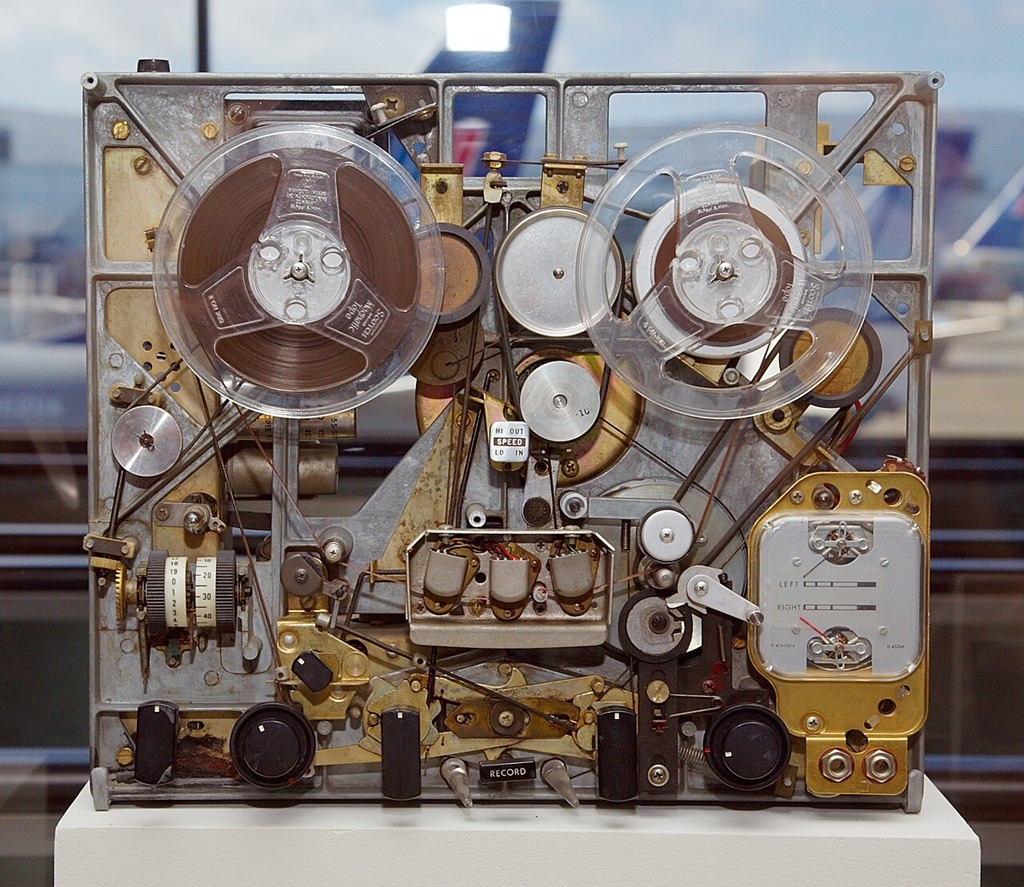
- Tape Recorder Heads Servicing – Ampex Tape Recorder 1965. Permission is granted to copy, distribute and/or modify this document under the terms of the GNU Free Documentation License, Version 1.2 – Author Gregory F. Maxwell
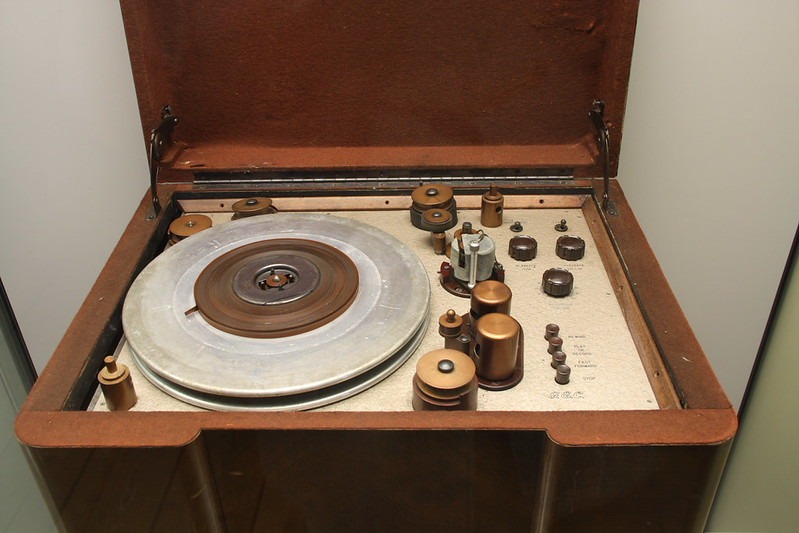
- Prototype reel-to-reel tape machine CC BY-SA 2.0 Richard Ash
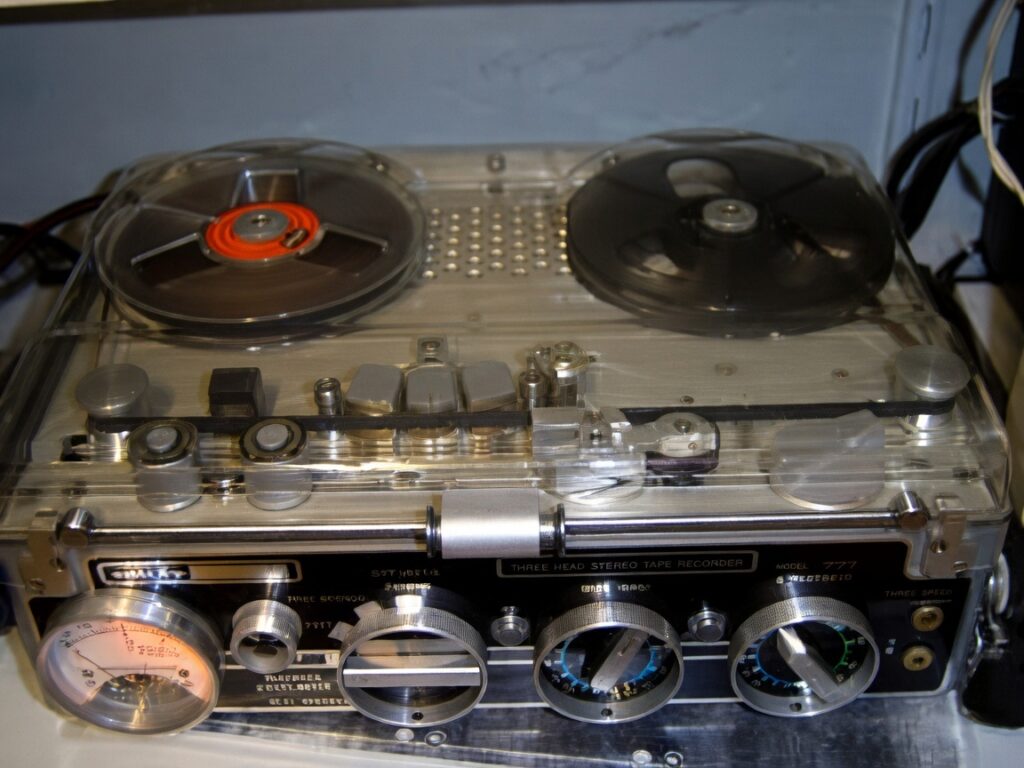
- Nagra 3 – This file is licensed under the Creative Commons Attribution-Share Alike 3.0 Unported license. Author: Stefan Kudelski’s tape recorder model Nagra III, 1967 – thanks to Peter and Frans http://www.soundtapewereld.nl
- Inside a D6 VTR Tape Deck. This work has been released into the public domain by its author, Telecineguy, at the English Wikipedia project. This applies worldwide. Author Telecineguy at English Wikipedia
- Research: Technical assistance and cross-referencing provided by X’s xAi Grok.
- Editorial: All case study data, circuit designs, and final editorial decisions are the sole responsibility of the author to ensure technical accuracy.