Table of Contents
ToggleThe Intel Comeback 2026 How Intel Lost Its Way and How They Are Planning to Make a Comeback
Having been in the IT Hardware sector for nearly 30 years there were a lot of very big major players, one of course being Intel. We did a case history on Intel in a Mini MBA session under the incredible and very astute Professor Anthony Hourihan (RIP Prof). Intel was instrumental in much of the design of the home computer as we know it through the 1990s until at least 2015 when they failed to meet their promises to make semiconductors with a 10nm substrate.
In this article I will summarise the story of Intel below.
1. The Architecture Battle (Intel x86 vs. ARM)
To understand Intel’s trajectory, you have to understand the fundamental architectural battle of modern computing: x86 vs. ARM.
• Intel’s x86 (CISC – Complex Instruction Set Computer): Designed for raw power. It handles massive, complicated tasks by executing complex instructions. It is the engine of heavy-duty desktops, laptops, and massive data servers. However, it is inherently power-hungry and runs hot.
• ARM (RISC – Reduced Instruction Set Computer): Designed for extreme efficiency. It breaks tasks down into simpler instructions, meaning it requires vastly less electricity and generates minimal heat.
• The Parallel: Think of Intel’s x86 as a heavy-duty semi-truck (built to carry massive loads but burns a lot of fuel) and ARM as a fleet of efficient electric delivery vans. For decades, the truck ruled the highway, but when the world shifted to mobile devices and edge computing, the electric vans took over the city.
2. The Golden Era (How Intel ruled via the Tick-Tock model)
Intel didn’t just lead the market; they were the market. Their decades-long dominance rested on two pillars masterminded by tech legends Gordon Moore and Andy Grove:
• The “Tick-Tock” Model: Intel operated like clockwork. A “Tick” year introduced a smaller, more efficient manufacturing process (shrinking the transistors). A “Tock” year introduced a brand-new chip architecture. This predictability forced the entire software and hardware industry to evolve on Intel’s timeline.
• The IDM Advantage: Intel was an Integrated Device Manufacturer (IDM). Unlike rivals who only designed chips, Intel designed and manufactured them in their own multi-billion-dollar factories (fabs). Because their designers worked hand-in-hand with their factory engineers, they achieved unmatched manufacturing precision, successfully riding Moore’s Law (doubling transistor density roughly every two years) for decades.
3. The Stumble (The 10nm delays and losing the crown to TSMC)
Intel’s fall from grace is a classic case of a company being blinded by its own success. • The 10nm & 7nm Stumbles: Around 2015, Intel hit a literal brick wall trying to shrink transistors to the 10-nanometer node. They delayed the rollout for years due to poor manufacturing “yields” (the percentage of usable chips per silicon wafer). While Intel stumbled, its rivals didn’t wait. • The Rise of the Fabless Model: Competitors like AMD realized they didn’t need to build expensive factories. They went “fabless,” focusing 100% on chip design and outsourcing the actual manufacturing to Taiwan Semiconductor Manufacturing Co. (TSMC). • TSMC Takes the Crown: TSMC embraced an advanced laser technology called EUV (Extreme Ultraviolet) lithography much faster than Intel did. Suddenly, TSMC was manufacturing chips that were smaller, faster, and more power-efficient than Intel’s. This allowed AMD to steal massive chunks of Intel’s PC and server market share, while Apple famously dumped Intel processors in 2020 to build their own ARM-based M-series chips manufactured by TSMC.
4. The Critical Errors (Passing on the iPhone/ARM)
In the mid-2000s, Apple’s Steve Jobs approached Intel’s then-CEO, Paul Otellini, asking Intel to design and manufacture the chip for a secretive new project: the original iPhone. Intel looked at Apple’s forecasts and turned the deal down. Why? Intel’s leadership calculated that the volume of iPhones sold wouldn’t be high enough to justify the massive research and development costs of tailoring a low-power chip. They didn’t realize the smartphone would reshape humanity. Because Intel passed, Apple turned to ARM architecture. This single decision locked Intel out of the mobile revolution and allowed ARM to become the undisputed architecture for billions of smartphones, tablets, and smart devices worldwide.
5. The Shift in Superpowers (The rise of Samsung in memory and volume)
While Intel was faltering in logic processors (CPUs), Samsung took a different route to the top: Memory (DRAM and NAND flash) and massive scale.
Strategy Component | Intel’s Approach | Samsung’s Counter-Strategy |
Product Focus | High-margin, highly complex CPUs. | High-volume Memory chips + Mobile SoCs. |
The Catalyst | Suffered massive delays in transitioning to next-gen nodes. | Capitalized on the global smartphone explosion and data center boom, both of which require immense amounts of memory. |
CapEx Betting | Hesitant, dividend-heavy capital spending during manufacturing crises. | Aggressive, counter-cyclical capital expenditure—building mega-fabs even during market downturns. |
By dominating the memory market and acting as a foundry for other tech giants, Samsung’s semiconductor division officially overtook Intel in total semiconductor revenue for the first time in 2017, shattering Intel’s 24-year streak as the world’s largest chipmaker.
6. The Parallel Threat (Nvidia shifting the paradigm to GPUs and CUDA software)
Ultimately, Intel’s greatest misstep wasn’t just losing the battle for the CPU—it was failing to realize that the CPU was no longer the most important chip on the block. While Intel was completely consumed within its own walls, desperately trying to solve its 10nm manufacturing nightmare, a silent storm was brewing outside the traditional computing market. For decades, Intel viewed the Graphics Processing Unit (GPU) as a niche side-component—a toy meant solely for rendering video game shadows and textures. They didn’t realize that the computing landscape was about to undergo a massive architectural pivot right beneath their feet.
The industry was beginning to hit a wall with general-purpose CPUs, which are designed to execute complex, linear instructions one at a time. For emerging, specialized workloads like artificial intelligence, the CPU simply wasn’t built for the job. Enter Nvidia. By championing the GPU—a chip architecture built to break massive tasks down and process thousands of simple mathematical calculations simultaneously—Nvidia answered a question Intel hadn’t even thought to ask.
But Nvidia’s CEO, Jensen Huang, didn’t stop at hardware. In 2006, he made a multi-billion-dollar gamble on a proprietary software framework called CUDA. For over a decade, Wall Street heavily criticized the move because it ate into Nvidia’s profit margins, but it allowed the global scientific and programming community to write their advanced code directly on Nvidia’s hardware.
By investing early in this parallel-processing powerhouse and locking developers into their software ecosystem, Nvidia quietly built the foundational engine of the future. When the generative AI boom suddenly erupted, tech giants realized that the complex mathematical matrices needed to train neural networks required Nvidia’s massive webs of parallel processors and the deeply entrenched CUDA software framework. While Intel was fighting a defensive war to keep its crown in standard computing, Nvidia’s hardware-software monopoly allowed it to step into the vacuum, completely bypassing Intel to build a brand new, multi-trillion-dollar empire right next door.
7. The Domestic Civil War (AMD dominating the 2020s desktop and gaming spaces)
For decades, Advanced Micro Devices (AMD) was viewed as the “budget alternative” to Intel—slightly cheaper, slightly hotter, and always a step behind. But in the late 2010s and throughout the 2020s, AMD executed one of the greatest corporate turnarounds in business history under CEO Dr. Lisa Su.
AMD’s modern dominance boils down to two genius strategies: • The Chiplet Revolution: Intel stuck with a “monolithic” design, meaning they tried to carve one massive, perfect chip out of silicon. If a single tiny part of that big chip had a defect, the whole thing was ruined, driving up costs. AMD pioneered a “chiplet” design, breaking the processor into smaller, modular puzzle pieces (compute dies) connected together. This made manufacturing dramatically cheaper and allowed them to scale up core counts easily. • The TSMC Alliance: As mentioned earlier, AMD went entirely fabless, outsourcing their printing to TSMC. Because TSMC successfully leaped ahead of Intel’s factories in transistor density, AMD’s chips suddenly became more power-efficient and faster than Intel’s top-tier processors.
The Cult of AMD (The Gaming Edge) Those passionate local builders who refuse to buy anything but AMD are likely looking at a specific piece of technology: 3D V-Cache (found on chips like the Ryzen 7 7800X3D and newer 9000X3D series). AMD figured out how to physically stack extra cache memory vertically right on top of the processor. For PC gaming, this massive pool of ultra-fast memory practically eliminated data bottlenecks. It gave AMD an absolute monopoly over high-end gaming performance, leaving Intel’s power-hungry 13th and 14th Gen Core i9 processors running hot, consuming twice the electricity, and dealing with highly publicized stability and oxidation bugs that permanently damaged Intel’s reputation among enthusiasts.
8. The 2026 Landscape (The modern threats: Big Tech insourcing and TSMC)
If you look at the semiconductor landscape today, Intel is no longer just fighting AMD and Nvidia. The competitive arena has fractured into three distinct fronts, making it a true multi-front war for survival.
The “Fabless” Foundry Threat (The Giants Intel Must Catch) Because Intel is splitting into a foundry business, its primary competitors aren’t chip designers anymore—they are chip printers.
• TSMC (Taiwan Semiconductor Manufacturing Co.): The undisputed king. TSMC manufactures roughly 90% of the world’s super-advanced chips. Every major player—Apple, AMD, Nvidia, Qualcomm—relies on them. Intel Foundry’s primary metric for success is whether its upcoming 18A process can match TSMC’s N2 (2-nanometer) family in yield and efficiency.
• Samsung Electronics: Samsung remains a major dual threat. They are a massive direct competitor to Intel’s product side in memory and mobile processing, and their own foundry division is fighting aggressively alongside Intel to capture any tech clients looking to diversify away from TSMC due to geopolitical tensions over Taiwan.
The Silicon Insourcing Threat (The Lost Clients) Historically, tech companies bought off-the-shelf chips from Intel. Now, the world’s biggest buyers are designing their own proprietary silicon and bypassing Intel entirely. • The Hyperscalers (Big Tech Data Centers): Microsoft (with their Maia AI chips), Amazon AWS (with Graviton), and Google (with their TPUs) are designing their own custom chips optimized perfectly for their own cloud networks, drastically reducing their reliance on Intel’s standard server processors.
• Apple & Qualcomm (The ARM Takeover of PCs): Apple completely severed ties with Intel, and their custom ARM-based silicon runs circles around older architecture in battery life and thermal efficiency. Qualcomm has followed suit, bringing powerful ARM-based Snapdragon X Elite processors into mainstream Windows laptops, threatening Intel’s historic stranglehold on the consumer PC market.
The Open Source Wildcard: RISC-V Looming on the horizon is an open-source architectural standard called RISC-V. Think of it as the “Linux of microchips.” Because it is open-source, companies don’t have to pay licensing fees to ARM or Intel to use it. It is growing exponentially in automotive tech, smart appliances, and data center management controllers—threatening to chip away at the low-and-mid-tier markets from the bottom up. (pun intended).
9. The Rebirth & Rescue (Intel 18A strategy and the Trump Administration's equity stake/tariff safety net)
Intel is currently undergoing what Wall Street is calling a “Silicon Renaissance.” Under its current restructured setup, the company has split itself cleanly down the middle:
• Intel Products: Focusing heavily on the “CPU Renaissance.” As autonomous AI agents become mainstream, complex reasoning requires far more CPU processing power than standard LLMs did, breathing new life into Intel’s core chip business.
• Intel Foundry: Operating as a completely separate business unit that acts as a “merchant foundry.” Intel’s primary goal is to commercialize its cutting-edge 18A (1.8nm-class) process node. They are no longer just making chips for themselves—they are actively trying to sign up external tech giants (like Microsoft and AWS) to manufacture their chips, aiming to become the Western alternative to TSMC.
Because Intel is the only American company capable of both designing and manufacturing advanced cyber-infrastructure on U.S. soil, the U.S. government views its survival as an absolute national security imperative.
Under the Trump administration, the strategy to bring Intel back into a league of its own has turned highly interventionist, shifting from simple subsidies to active state-backed partnership:
• Direct 10% Equity Stake: In an unprecedented move using a mix of CHIPS Act restructuring and executive authority, the Trump administration acquired a 10% equity stake in Intel via an $8.9 billion common stock investment. This injected vital liquidity into Intel to offset its cash-burning foundry expansion, essentially acting like a national venture capital shield.
• Aggressive 232 Tariffs: The administration implemented Section 232 national security tariffs (starting at 25% ad valorem) on foreign semiconductors, advanced lithography equipment, and derivative parts.
• The Strategic Angle: By placing heavy tariffs on foreign-made chips (particularly targeting reliance on Taiwan and China), the U.S. government is artificially tilting the economic scales. The goal is to make importing chips so expensive that American tech firms are effectively forced to buy from domestic manufacturing facilities—creating a guaranteed customer base for Intel’s new 18A fabs.
Conclusion: A High-Stakes Bet on American Silicon — With a Geopolitical Wildcard
Intel’s story is far from over. What began as a cautionary tale of complacency, missed opportunities, and manufacturing missteps has evolved into one of the most ambitious industrial rescues in modern history. With its 18A process delivering steady yield improvements of roughly 7–8% per month as of mid-2026, Panther Lake CPUs now in early deployment, and a restructured foundry business actively courting external customers, Intel is executing a genuine technical turnaround.
The Trump administration’s intervention — the ~10% equity stake and targeted Section 232 tariffs — provides critical breathing room and a domestic demand floor. National security imperatives have justified aggressive protectionism, and early signs suggest it is tilting investment decisions back toward U.S. shores.
Yet tariffs that raise the cost of imported chips must be paired with aggressive gains in export competitiveness, performance, and efficiency. Otherwise, American technology companies risk losing global market share in the very markets they serve. My own experience on a training exercise in Taipei in 2006 — watching Canon printers dominate shelves while HP was virtually absent — remains a microcosm of a broader pattern: when domestic costs rise without corresponding advantages, customers simply vote with their wallets elsewhere.
Enter the Geopolitical Black Swan. A Chinese invasion or even a prolonged blockade of Taiwan would represent the ultimate supply-chain rupture. Taiwan’s fabs (primarily TSMC) produce the lion’s share of the world’s most advanced chips. History has already shown us what natural disasters can do — earthquakes, typhoons, and tsunamis have repeatedly triggered global shortages in memory, hard drives, and components. An armed conflict would amplify that chaos exponentially: physical damage, power failures, talent flight, and halted exports. Taiwanese companies would accelerate relocation efforts overnight, with the U.S. positioned as the prime beneficiary.
President Trump’s recent visit to China, where he reportedly treated Taiwan as a high-value negotiating chip in classic deal-maker fashion, underscores this tension. By creating Fear, Uncertainty, and Doubt (FUD), he pressures all parties toward outcomes that favor American resurgence. It’s a high-risk, high-reward strategy — one that could dramatically accelerate Intel’s comeback by forcing a faster reshoring of critical production.
The uncomfortable truth is that Intel may have already lost parts of the war. TSMC’s manufacturing mastery, AMD’s execution in client and server segments, Nvidia’s unbreakable CUDA moat, and the hyperscalers’ aggressive insourcing have redrawn the battlefield. Even with government backing, catching up in foundry leadership while fighting on multiple fronts remains an enormous challenge.
However, complete defeat is not inevitable. Intel still possesses world-class design talent, a massive U.S. manufacturing footprint, and now — crucially — aligned national policy. A Taiwan crisis could hand Intel (and American semiconductor policy) the ultimate phoenix moment, but only if the company seizes it through relentless execution.
The coming years will test whether America can rebuild semiconductor leadership not just through tariffs, subsidies, and geopolitical leverage, but through superior innovation and competitiveness. Intel’s Silicon Renaissance is real — but it is also a race against time in a world that no longer waits for anyone.
The stakes extend far beyond one company: they touch economic security, technological sovereignty, and America’s place in the next era of computing. Whether Intel ultimately wins, places, or merely survives — and whether a Black Swan event hastens that outcome — will say as much about the resilience of U.S. industrial policy and deal-making as it does about the company itself.
Further Reading
- Channel Dive – Intel banks on a CPU resurgence as AI workloads shift
- Reuters – Intel’s stock is up but the comeback is still underway
- Tom’s Hardware – Intel vs AMD: Which CPUs Are Better in 2026?
- Countering the 2026 Doomsday Panic: Human Resilience, Governance Failures, and Why Technology Is the Real Answer
Technical Credits & Research
- Visuals: Image assets generated by Google’s Gemini AI and PicsArt
- Featured Image – Intel facility in Hillsboro, Oregon – This file is licensed under the Creative Commons Attribution 2.0 Generic license. Author Sam Beebe, Ecotrust.
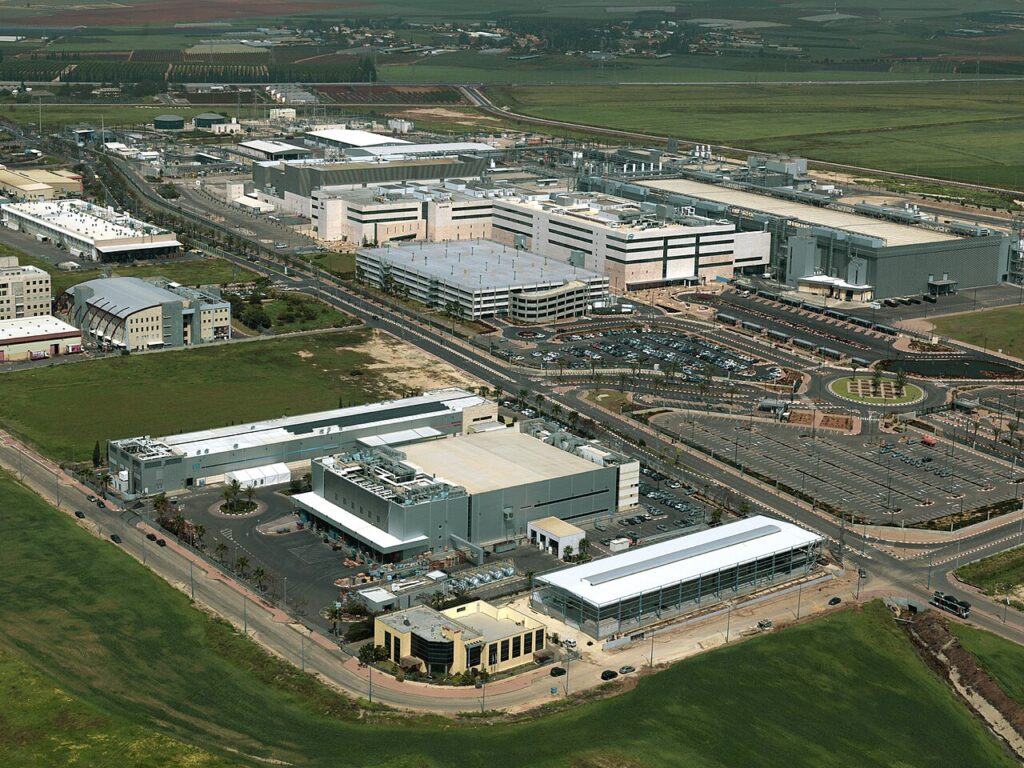
- Intel factory in Kiryat Gat, employing about 5000 workers, which manufactures computer chips. This file has been submitted through the Israeli Pikiwiki project and uploaded here automatically. The project is cooperation between the Israel Internet Association and Wikimedia Israel in an effort to promote the concept of free content on the Web, by creating an image collection of digital-format, good quality photographs, documenting events relating to the history of Israel, or depicting places of distinction in Israel and the Middle East. The Pikiwiki Project is managed from 2021 by the “Heritage Stones” group.
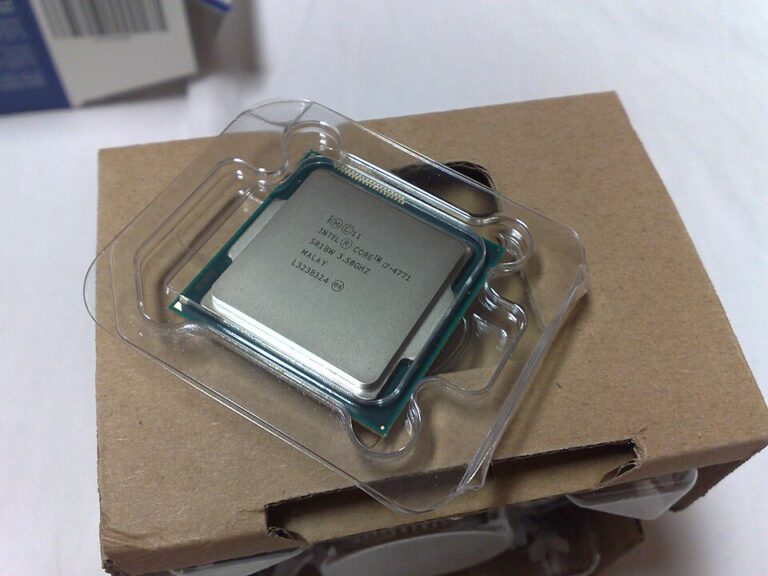
- Intel Haswell i7-4771 CPU, on top of its original packaging with an OEM fan-cooled heatsink. This file is licensed under the Creative Commons Attribution-Share Alike 3.0 Unported license. Author Dsimic
- Research: Technical assistance and cross-referencing provided by Grok xAI and Gemini.
- Editorial: All case study data, circuit designs, and final editorial decisions are the sole responsibility of the author to ensure technical accuracy.
[…] Parts-Ring: How Intel Lost Its Way and How They Are Planning to Make a Comeback […]