2026 Doomsday Panic – Good morning, readers. Like many of you in South Africa and around the world, I opened MSN this morning to the headline “Global alert: Scientists warn of a potential catastrophe in 2026” — a glossy gallery piece reviving a 66-year-old mathematical prediction by physicist Heinz von Foerster. You can read the full article here: https://www.msn.com/en-us/lifestyle/career/physicists-warn-of-potential-global-catastrophe-in-2026/ss-BB1ikSRt.
Interestingly, our school teachers in the 1970s were already echoing the same Malthusian warnings.
Table of Contents
ToggleWho was Heinz von Foerster?
Heinz von Foerster (1911–2002) was an Austrian-American physicist and philosopher, best known as one of the founders of second-order cybernetics. In a 1960 Science article, he published his famous “Doomsday Equation,” which calculated that the human population would become infinite on Friday, 13 November 2026. Using 2,000 years of data, he showed population growing faster than exponential — a mathematical singularity. It was partly tongue-in-cheek, but the warning was clear.
The Friday the 13th claim made me wonder if this wasn’t April the 1st when the “piece” was published.
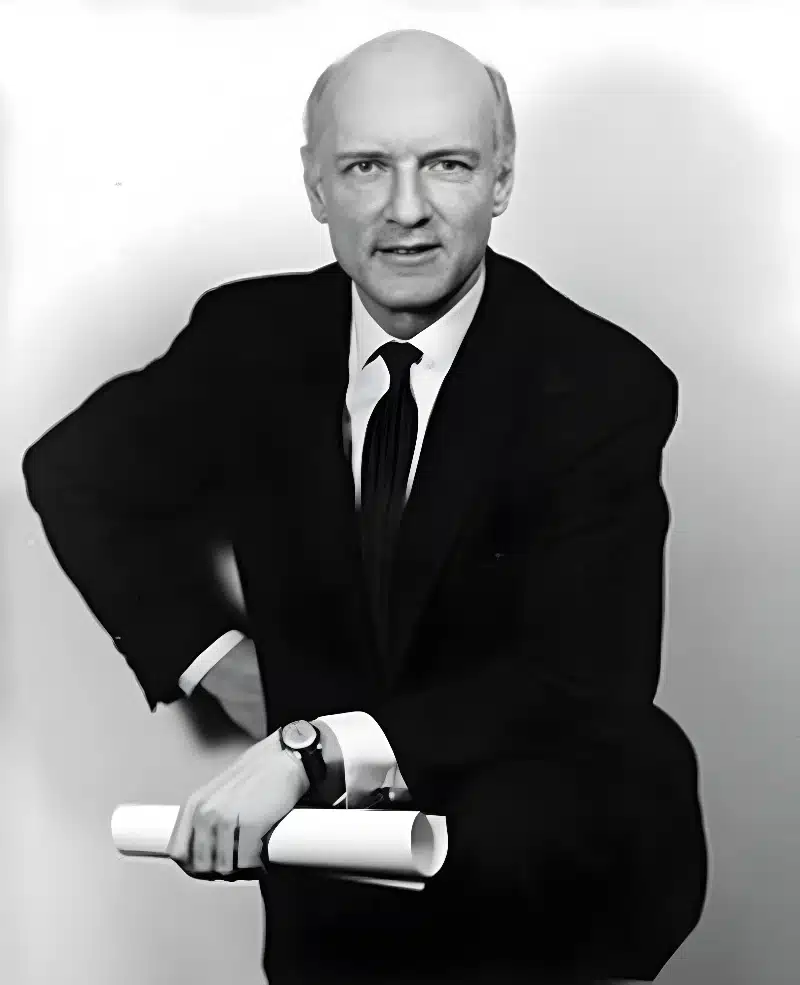
Foerster's 1960 Predictions
According to his equations, 13 November 2026 would be the day humanity hits a hyperbolic “doomsday” singularity — resources would collapse and people would literally be “squeezed to death.” It echoes Thomas Malthus’s 1798 theory that population grows geometrically while food grows only arithmetically. The MSN piece repeats the usual fears: food insecurity, urbanisation, deforestation, climate change, and calls for “peoplo-stats,” birth control, and global population management.
Recycled Alarmism - fact check 2026
This is recycled alarmism — and it is dead wrong. Mankind is remarkably resilient. We are not headed for von Foerster’s nightmare in 2026. The real data, history, and technological trends tell a far more optimistic story. Our challenges are not too many people, but broken governance, weak institutions, and the failure to embrace the tools that create abundance. That is why this belongs on a Technology-focused site: innovation, not panic or top-down controls, is how we build a sustainable future.
The Numbers ignored
Von Foerster’s model assumed the 0–1958 trend of ever-accelerating growth would continue. It didn’t. Global fertility has plummeted from nearly 5 children per woman in the 1960s to around 2.2–2.3 today. Over 71% of the world’s population now lives in countries below the replacement level of 2.1. East Asia and Eastern Europe are already in decline or rapid slowdown. Parts of the United States and South Africa show the same pattern. The world’s population is still rising due to momentum and longer lifespans, but the growth rate is slowing dramatically. Projections show a global peak mid-century, followed by stabilisation or decline in many regions. The 2026 “boiling point” is simply not materialising.
The True Story - Live Aid 1985
History has already demolished these doomsday forecasts. Take the 1985 famine relief efforts tied to Live Aid and Band Aid. Sir Bob Geldof deserves every kudos for his tireless humanitarian drive — he mobilised the world when people were starving. But in Chad, the architects of the aid effort slammed into a brutal reality: the country (twice the size of Texas) had never had more than about 120 miles of paved/tarred roads, with some contemporary accounts citing barely 26 miles of usable tar in key areas. Convoys took days to crawl 130 miles through war-damaged, bandit-ridden terrain. Food piled up at ports or airfields while people died inland. There was no meaningful continuity plan. The core problem wasn’t too many mouths — it was shocking governance, civil war that had destroyed infrastructure, and leaders who showed little interest (or capacity) in efficient delivery. Aid groups like MAF flew in thousands of tonnes and fed tens of thousands short-term, but the underlying systems remained broken. Good intentions were defeated by poor leadership.
The Pattern continues
This same pattern repeats in every major modern famine: Ethiopia 1984–85, Somalia, Chad, and beyond. Conflict, political mismanagement, and the weaponisation of hunger cause far more suffering than raw population numbers. In Africa, outcomes have too often been cycles of dependency rather than lasting resilience. Von Foerster and Malthus fixate on headcounts while ignoring human systems. We are not doomed by population growth — we are held back by broken incentives and bad governance.
Weak Governance, Low Education equals Starvation
The countries with the greatest pressure today are those with limited resources and chronically weak governance: Chad and Somalia (~5.8–6.0 children per woman), and Ethiopia (~3.7–3.8). It is heartbreaking to see families bring children into the world they struggle to feed. In fragile societies, children become labour, old-age insurance, and protection against high infant mortality. Weak property rights, low female education, limited contraception, and conflict lock in larger families. This is a serious political failure — not a global overpopulation crisis.
Strong Governance, High Education equals population drop
Contrast this with the world’s efficiency powerhouses: Taiwan (fertility ~0.86), Japan (~1.22), China (~1.0), and South Korea (even lower). These nations achieved the fastest fertility declines in history through strong institutions, girls’ education, urbanisation, and economic opportunity — not coercive edicts. They are now innovation hubs, yet they perfectly illustrate Elon Musk’s warning.
Why is Elon Musk's warning relevant.
I know many readers may roll their eyes when Elon Musk is mentioned — he is a polarising figure often criticised for being a highly successful businessman. Yet Musk has repeatedly shown a rare, far-reaching vision that sees long-term patterns most people miss. What drives him is not merely profit, but relentless innovation and a deep belief in humanity’s potential. This is why his perspective carries real weight.
Musk has forcefully challenged the overpopulation narrative, calling it “the most nihilistic lie ever told.” According to him, the real long-term threat to civilisation is not too many people, but population collapse caused by crashing birth rates. Global fertility has already fallen below replacement level in most developed and many emerging nations. Countries like Taiwan, South Korea, Japan, and China now face severe demographic decline, shrinking workforces, rapidly aging populations, fewer innovators, and civilisational risk far greater than climate change. Musk argues that more people — not fewer — are humanity’s greatest asset. Far from fearing a 2026 doomsday of overcrowding, he believes we should encourage larger families and use technology, especially AI, to support a thriving, growing humanity.
Being Proactive vs Doomsday Whispers
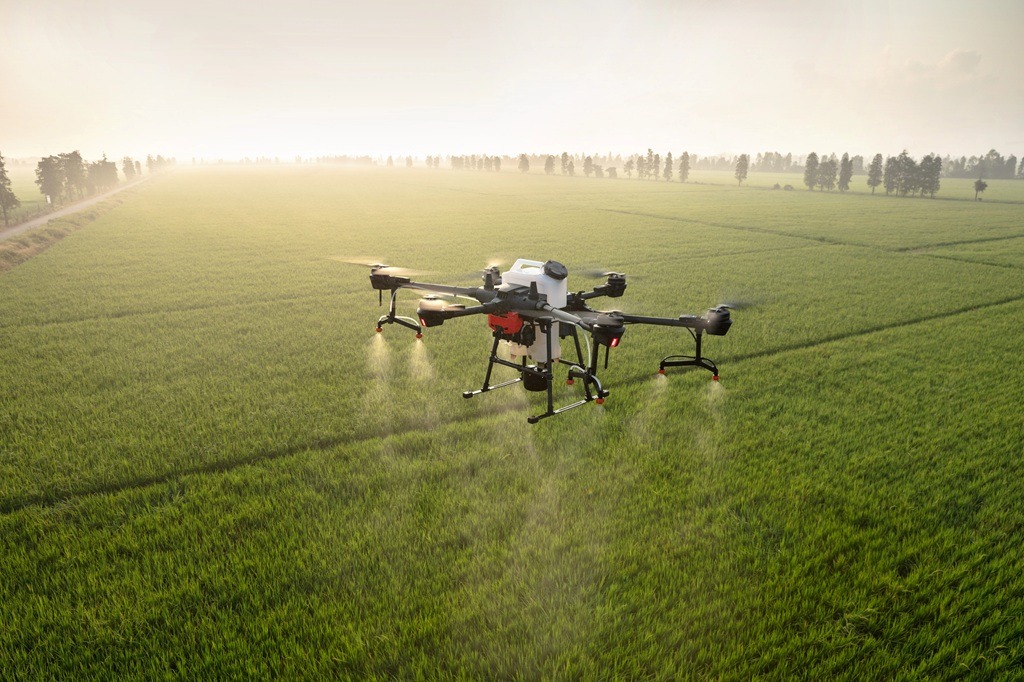
So what’s the proactive path forward instead of doomsaying or “peoplo-stats”? This is where Technology becomes the game-changer. Agricultural productivity has already outpaced population growth for decades. Now AI is supercharging it: real-time satellite and drone monitoring, predictive analytics, robotics, precision irrigation, vertical farming, and biotech. These tools slash waste, multiply yields, and decouple growth from finite resources.
Closely linked to this is women’s empowerment — one of the most powerful game-changers of all. When women gain quality education, economic opportunities, property rights, and voluntary family planning, fertility rates decline naturally and dramatically. This is exactly what transformed East Asia. In South Africa and the developing world, investing in girls’ education and women’s economic participation is not just morally right — it is one of the highest-return strategies for stability and sustainable development. Technology and women’s empowerment together offer a far more humane path than any coercive controls.
Our views in South Africa
South Africa’s challenges — “all talk and no delivery” on infrastructure and services — mirror the governance trap we saw in 1985 Chad. The parallels run deeper: our government shows disturbingly little concern for the ongoing murders of farmers and their families, despite detailed reporting by groups like AfriForum. In 2025 alone, AfriForum documented 184 farm attacks and 29 farm murders, many involving extreme violence. These crimes are not treated as a priority, even though they undermine the country’s food production. This erodes property rights and investor confidence.
Technology, Innovation and Artificial Intelligence
But the same tech tools can help here too: AI-optimised water management, agricultural drones, data-driven urban planning, and advanced rural security systems. Instead of fearing headcounts, we must invest in education (especially for women and girls), strong property rights, market incentives, and accountable leadership that treats rural safety and food security as national priorities. Fertility self-corrects as prosperity rises — exactly as it did in East Asia.
Human Ingenuity proves Scientists wrong
Human ingenuity has repeatedly proved Malthus and von Foerster wrong. Past doomsday predictions failed because they underestimated our ability to innovate. 2026 is far more likely to be remembered for AI breakthroughs in food security, energy, and sustainability than for any mathematical apocalypse.
That’s why this site exists: to explore and champion the tools that make resilience real. Technology is the ultimate expression of human adaptability. Let’s stop panicking about 2026 and start building the abundant, sustainable world our children deserve.
What's your take on this?
What do you think? Drop your thoughts in the comments. Have you seen technology already changing food production, water management, or rural safety in your area? Are you concerned about governance failures holding South Africa back? Share your experiences — let’s keep the conversation evidence-based, forward-looking, and focused on solutions. Stay resilient, South Africa. The future is ours to shape with clear eyes and better tools.
Further Reading
Research/Credits
- Seth Jacobson, USA TODAY NETWORK – New England – Physicist in 1960 said world would end in 2026. Here’s the exact date
- The Information Philospher – Heinz von Foerster
- Emerald Publishing – Beyond Doomsday – Heinz von Foerster’s legacy in systems theory and cybernetics
- The Starfish, the Musician, and the Machine – Internal Online Parts
- The Forgotten Artisans: Why South Africa’s Schooling and Corporate Systems are Starving the Economy
Research assistance provided by Grok xAi, Google’s Gemini and through Wikipedia. All facts, personal experiences, and final editing remain the responsibility of the author.
Image Credits
- Feature Image: Jimmy Page, Robert Plant, and John Paul Jones on stage with drummers Tony Thompson and Phil Collins in addtion to bassist Paul Martinez performing at Live Aid at JFK Stadium, Philadelphia, 1985. This file is licensed under the Creative Commons Attribution-Share Alike 3.0 Unported license.Author Squelle
- This file is licensed under the Creative Commons Attribution-Share Alike 3.0 Unported license.
- Image of Heinz von Foerster GNU Free Documentation License User: Thomas von Foerster
- Image of Drone: Pixabay Liu Xiaozhong