Table of Contents
ToggleMost Produced Internal Combustion Engines - a Global Overview
The internal combustion engine has powered the modern world since the late 19th century. From humble beginnings with pioneers like Otto and Benz, certain designs achieved massive production volumes through reliability, simplicity, and versatility. Here’s a focused look at the standouts, with relevance for South African, Australian, and European readers. The four stroke is by far the most common internal combustion engine but our next article will be looking at those beautiful, smelly two strokes.
1. Honda Super Cub Engine Family – The Global Champion
The Honda Super Cub (C100 series and variants) likely claims the crown with over 110 million units produced since 1958. Its core is a simple, horizontal 4-stroke single-cylinder air-cooled engine, starting around 49cc with variants up to 124cc. The architecture has remained remarkably consistent despite updates for emissions and efficiency.
Manufacturing today: Production occurs across 15+ countries, with major hubs in Thailand, Vietnam, Indonesia, India, and China. Japan handles limited special/domestic models, but small-capacity engines are largely made in Asia.
These engines democratised personal transport, especially in Asia and developing regions, thanks to legendary durability, 100+ mpg efficiency, and low maintenance.
Related sporty variants and the SA “Buzz Bike” story Closely related to the Super Cub family was the Honda SS50 — a popular 49cc OHC (overhead cam) four-stroke single that delivered around 6 hp at 11,000 rpm. Unlike the step-through Super Cub, the SS50 was a proper little motorcycle with a sportier pressed-steel frame, making it a favourite among young riders. In 1970s South Africa these high-revving Hondas were affectionately known as “buzz bikes” because of their eager, buzzy engine note when ridden hard.
All small Hondas of that era loved to rev, and they still do today in modern Cubs and scooters — a character trait that made them engaging and reliable favourites worldwide.
2. Chevrolet Small-Block V8 – The Automotive King
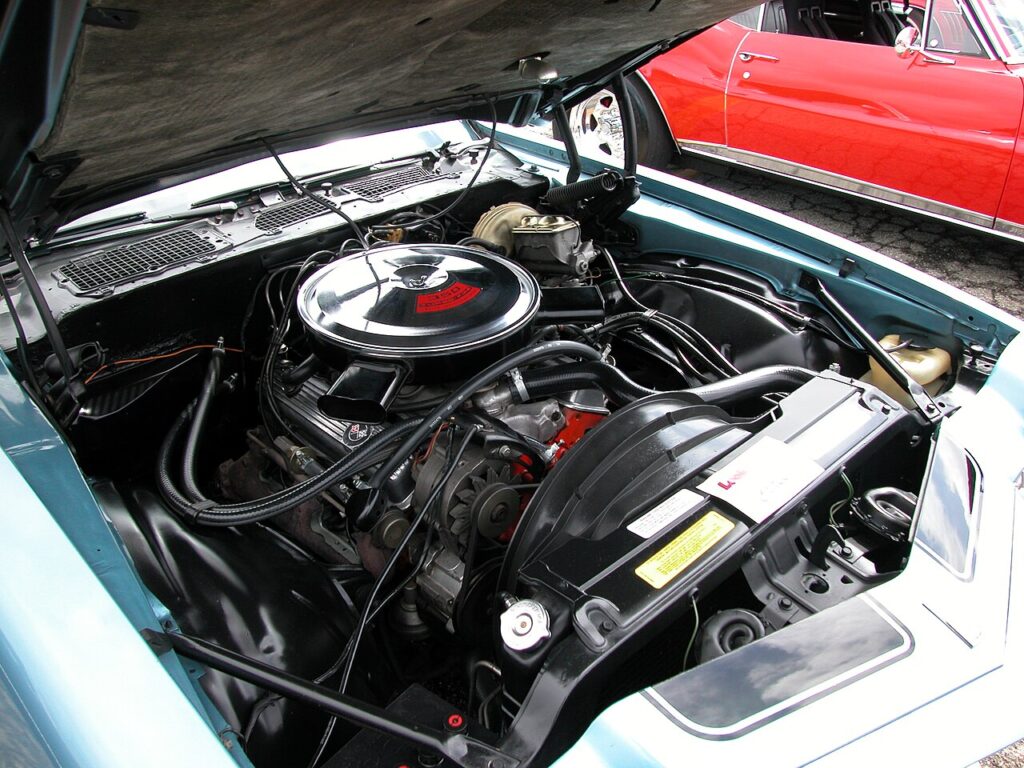
The Chevy small-block (notably the 350 ci / 5.7L and family) has exceeded 100 million units since 1955, making it the most mass-produced automotive engine.
Why “small block”? It earned the name because it was physically compact and lightweight compared to Chevrolet’s earlier and larger “big-block” V8s. Designed as a simple, versatile overhead-valve V8 with thin-wall casting, it offered excellent power-to-weight and huge aftermarket potential. Displacements ranged from 262–400+ ci.
For SA, Australian, and European readers: It powered local specials like the Chevrolet Firenza Can-Am in South Africa, Holden conversions in Australia, and various Opel and sports car applications in Europe. Its popularity in bakkies, boats, and swaps remains strong due to parts availability and tuning ease.
Racing success: It dominated NASCAR for decades. Elsewhere, it powered successful Corvettes (Le Mans class wins), Can-Am cars, drag racers, and local touring/saloon efforts in SA and Australia.
3. Briggs & Stratton Small Engines – The Utility Workhorse
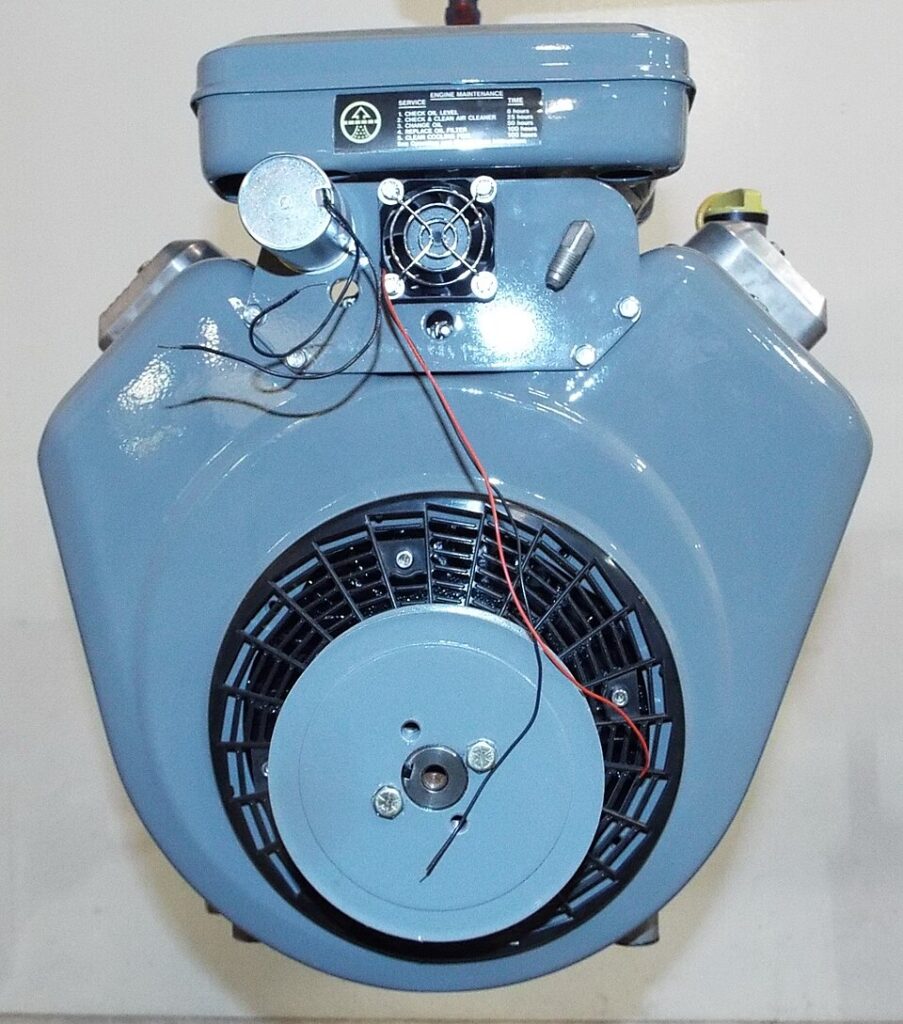
Briggs & Stratton has produced well over 100–200 million small 4-stroke engines, mainly single-cylinder or V-twin air-cooled units for lawnmowers, generators, and pressure washers. Many share core families (e.g., aluminium-block vertical-shaft designs).
In South Africa, they remain common in gardens and farms, but electric mowers and tools are reducing demand. To stay competitive, B&S is pushing electrification (battery systems, hybrids), smarter controls, improved efficiency on petrol engines, and premium Vanguard commercial lines. They highlight service networks and durability.
Cylinder construction: Modern engines typically use aluminium blocks with cast-iron sleeves for better longevity and heat management. Early all-aluminium “Kool-Bore” versions could wear faster if poorly maintained, but sleeved designs handle hundreds of hours with proper care.
4. Volkswagen Beetle Air-Cooled Flat-Four
Roughly 21.5 million Beetles (plus other VW models) used this iconic air-cooled boxer four. Displacements grew from ~1.1L to 1.6L (25–60 hp). Its simplicity—no radiator, rear-mounted layout, and robust fins—made it legendary for reliability in harsh conditions. Production spanned 1938–2003, one of the longest single-platform runs ever. Enthusiasts still love it for restorations and engine swaps.

5. Ford F-150 Engines
The F-150 is America’s best-selling truck for decades, but its engine families (e.g., 5.0L Coyote V8 or EcoBoost V6s) don’t match the cumulative lifetime totals of the Honda Cub, Chevy small-block, or Briggs utility engines. High annual production is spread across multiple options, and it’s more recent/region-specific.
6. Most Widely Used Engines in South Africa
Globally dominant engines matter, but locally the picture reflects our conditions. Toyota leads with reliable inline-4 petrol and especially GD-series diesels (2.0L/2.4L/2.8L) in Hilux and Fortuner bakkies—prized for longevity on rough roads and with poor fuel.
The VW Polo Vivo (locally built) is a top passenger car with simple petrol engines. Older Chevy small-blocks and VW air-cooled units persist in classics and farms.
On Ford V6 engines: The Ford Essex V6 (2.5L and especially 3.0L/3.4L variants) was hugely popular and locally produced in South Africa until 2000. It powered Cortinas, Sierras (including XR6), bakkies, and more. Tough, tunable, and a local legend in racing and daily use.
Further Reading
- Moneyweb – AA CEO sounds alarm over Chinese vehicle safety – 29/05/2026
- Parts-Ring – How the South Korea China Auto Industry Turned the Auto Industry on Its Head: The Three Waves of Disruption
- Parts-Ring – Ford South Africa
- Dealerfloor- How China plays the long game in the global auto industry
- Parts-Ring – Nissan Downward Spiral: Why One of Japan’s Biggest Carmakers Is Fighting for Survival in 2026
- Parts-Ring – British Car Industry Downfall: The Rise and Fall of a Manufacturing Empire
- Council on Foreign Relations – Will China Take Over the Global Auto Industry?
Technical Research and Image Credits
- Featured Image – Honda Cub C70 photographed in Trat, Thailand. This file is licensed under the Creative Commons Attribution-Share Alike 4.0 International, 3.0 Unported, 2.5 Generic, 2.0 Generic and 1.0 Generic license.Author Khaosaming
- 350 cubic in V8 engine from GM. This is from a 1970 Chevrolet Camaro Z28 RS. Camera used was a Nikon Coolpix 5000. This file is licensed under the Creative Commons Attribution 2.5 Generic license. Rich Niewiroski Jr.
- An accessory-end image of a Briggs & Stratton industrial 90 degree V-twin gasoline engine. This file is licensed under the Creative Commons Attribution-Share Alike 4.0 International license. Author Bigdumbdinosaur
- Boxermotor, 4 Zyl, 1192 cm³, verbaut in TS 8/8. This file is licensed under the Creative Commons Attribution-Share Alike 4.0 International license. Johannes Maximilian
- Visuals: Image assets generated by X’s xAi Grok, Google’s Gemini AI and PicsArt.
- Research: Technical assistance and cross-referencing provided by Grok xAI and Gemini.
- Editorial: All case study data, circuit designs, and final editorial decisions are the sole responsibility of the author to ensure technical accuracy.