In the same way state-owned defence giants like Iscor, Armscor and Denel were reduced to rubble, South Africa’s rail and port infrastructure—once the backbone of industry and trade—has suffered a similar fate. The collapse of Transnet (freight rail and ports) and PRASA (passenger rail) represents the final blow to connected sectors like steel, agriculture, and manufacturing. Pre-1994, these structures worked in harmony and were rock solid. Today, the story is one of ineptitude, massive hemorrhaging of capital into unscrupulous hands, and a system that deters serious investment.
For international readers: South Africa’s rail network was historically efficient, moving bulk commodities and passengers reliably under the unified South African Railways and Harbours (SAR&H). Post-1994, chronic mismanagement, corruption, vandalism and cadre deployment turned it into a national liability. Here’s the breakdown.

Table of Contents
ToggleTransnet: The Freight Lifeline That Became a National Bottleneck
Transnet, the state-owned monopoly responsible for freight rail, major ports and pipelines, was once a vital artery. It moved Iscor steel, mining ore, agricultural exports and components that supported the old Armscor ecosystem. Rail freight volumes were robust, and ports like Durban handled cargo efficiently.
Decades of under-maintenance, theft of signalling cable and infrastructure, vandalism, and mismanagement have caused a spectacular collapse. Rail volumes have plummeted (Transnet expects around 168 million tons for 2025/26, still well below historical peaks), forcing a massive shift to road haulage. The impact has been devastating for steel (contributing to plant closures), agriculture (missed export windows), and the broader economy—estimated daily losses run into billions.
Heavy trucks now clog highways, destroying provincial roads, raising accident rates and costs. This indirectly hits the minibus taxi industry through chronic congestion and a stagnant economy starved of growth.
Ports performance remains dire. In the World Bank’s 2024 Container Port Performance Index, Durban ranked dead last globally (out of 403–405 ports), with Coega near the bottom, Cape Town around 400th, and Port Elizabeth 395th. Turnaround times and cargo dwell make South Africa one of the worst places in the world for getting containers and breakbulk off (and back onto) ships.
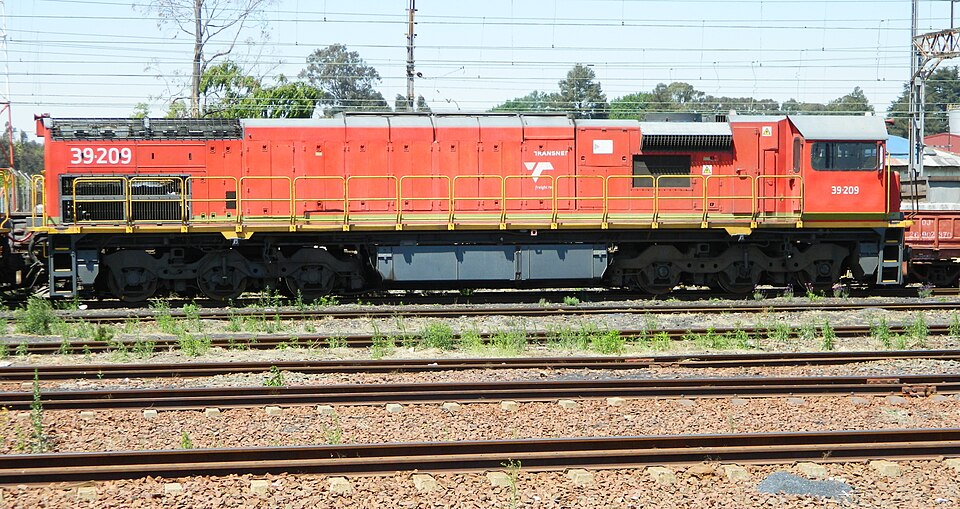
Pre-1994 Discipline: Railway Police, State-Owned Abnormal Loads, and the SAR&H System
Under the old National Party government and the SAR&H, the system was tightly controlled and surprisingly effective. A dedicated Railway Police structure maintained security and order across the network. Many abnormal load trucks (for oversized or heavy cargo) were state-owned, and strict rules governed road transport to protect rail as the primary freight backbone.
Business owners—whether running a small supermarket, hardware store, or other enterprise—could not simply load up a private van and drive long distances for stock. If the destination was more than a short distance from a main hub (exact kilometre limits varied but were strictly enforced), you had to use SAR&H transport. Stock was railed from central depots (like Cape Town) to the nearest town or suburb hub. You would then collect it locally with your own vehicle.
To give a practical example: living in Hermanus, you could not just hop into your van and drive through to Cape Town for supplies. You had to use the state-owned transport belonging to the South African Railways & Harbours. It may sound totally mad to modern ears—restrictive and bureaucratic—but the system worked. It prevented cut-throat road competition that could undermine rail investment, kept roads clearer, reduced wear and tear, and ensured reliable, scheduled bulk movement. The Railway Police helped enforce discipline and deter theft or sabotage.
A bit of insight into the Transport Permit System (something most youngsters today have never heard of, but which shaped logistics for decades):
- The Permit Barrier: To move goods by road outside of very small local areas, you needed a Public Road Carrier Permit issued by a Local Road Transportation Board. These were notoriously difficult to obtain because the Railways would almost always object, claiming they could provide the service themselves.
Maximum Driving Distances (the “free” or exempted zone for own-goods collection):
- For many years, the standard “free zone” for a merchant to transport their own goods in their own vehicle was roughly 30 miles (approx. 48 km).
- By the late 1970s and 1980s, this was often expanded to an 80 km radius from your place of business.
- Strict enforcement applied: if you were caught driving 100 km to pick up stock without a specific permit, you were in direct violation of the law.
This pre-1994 harmony between freight rail, ports, and even passenger services stood in stark contrast to today’s parallel failures.
Why the change? Post-1994 liberalisation, combined with under-investment and mismanagement, shifted everything to road while rail infrastructure crumbled. Serious private investors now shy away due to BBBEE compliance burdens and the Expropriation Act (signed into law in January 2025), which raises fears that assets on the tracks could be seized without compensation.
2. PRASA: Passenger Rail’s Even Deeper Collapse and the Daniel Mthimkhulu Scandal
While Transnet handles freight, PRASA (Passenger Rail Agency of South Africa) manages commuter and regional passenger services (Metrorail and long-distance). Pre-1994, the integrated rail system operated reliably. Post-1994, the split and subsequent mismanagement led to dramatic decline: passenger trips collapsed, vandalism and theft left many lines inoperable, and billions spent on recovery plans yielded limited results.
The epitome of ineptitude and capital hemorrhage is the case of Daniel (Mshushisi) Mthimkhulu, former Head of Engineering Services at PRASA.
Mthimkhulu claimed impressive credentials on his CV: a national diploma in mechanical engineering, a BTech from Vaal University of Technology, a master’s degree in engineering from Wits University, and a doctorate (PhD) from Technische Universität München in Germany. In reality, he only held a high-school matric certificate—none of the claimed qualifications existed.
As chief engineer he influenced major procurement, including a botched train tender where the purchased trains were too tall for existing platforms, forcing costly modifications and repairs estimated at least R2.7 billion. He also forged a job offer from a German company to justify a massive salary increase (from ~R1.6 million to R2.8 million per year).
In 2022 he was convicted on fraud and forgery charges. In September 2024, he was sentenced to 15 years in prison (the maximum for the main fraud count) with concurrent terms, and ordered to repay millions. The scandal symbolises how unqualified appointments and unchecked procurement turned PRASA into a sinkhole for public funds.
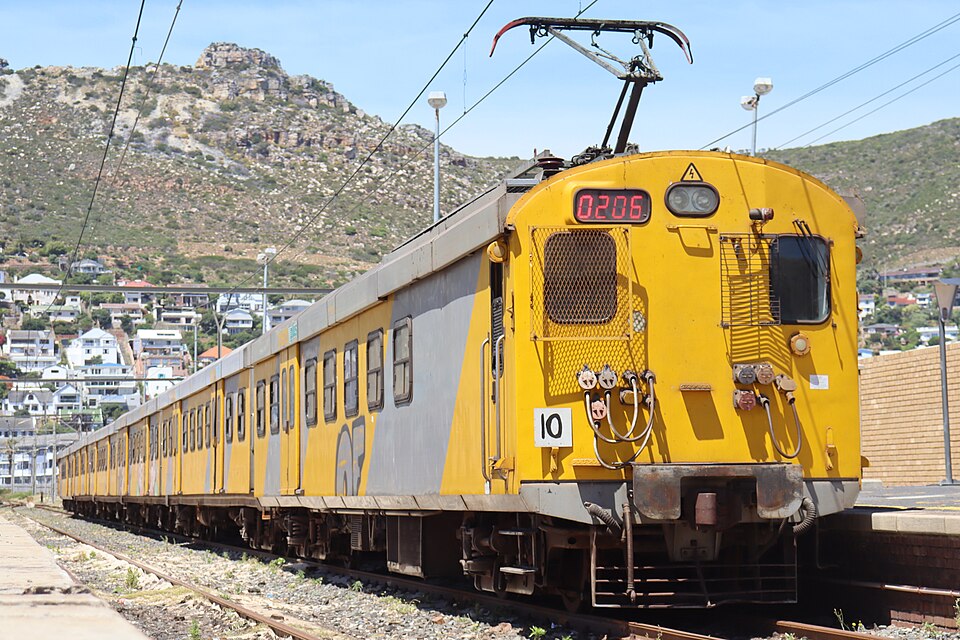
Personal Reflection: Time for Full Privatisation
The pre-1994 system wasn’t perfect, but it worked efficiently and delivered results. Today, the combination of lack of government knowledge, foresight, and accountability has destroyed what was once reliable infrastructure. From defence to steel to logistics, state ownership without merit or oversight has proven disastrous.
Transnet and PRASA must move toward genuine private operation—full concessions or privatisation where feasible. BBBEE mandates and the threat of expropriation without compensation make South Africa toxic for the long-term investment we desperately need in rail and ports. The private sector has shown in other areas (like defence exports) that it can deliver. It’s time to apply the same logic here before more industries are dragged down.
What do you think—can Transnet and PRASA ever be fixed under state control, or is private sector takeover the only realistic path? Drop your thoughts below
Further Reading:
- Integrated Bridge System
- Marine Engineer Evolution
- The Truck Driver Who Revolutionized Shipping
- Why the Cape Doctor Makes Saldanha South Africa’s Next Major Port
- Silvermine: South Africa’s Forgotten Underground Maritime Nerve Centre
- More on the history of Cape Town Radio
- Starlink's Efforts in South Africa
- Safmarine History - Watts to Waves
- Sanctions Busters - The Rise and Fall of Iscor, Armscor, and Denel
Credits
Research assistance provided by Grok xAi. All facts, personal experiences, and final editing remain the responsibility of the author.
Image Credits
- Durban Harbour – Flickr
- Transnet Class 34 GE U26C 34-902 and 34-907 This file is licensed under the Creative Commons Attribution-Share Alike 2.0 Generic license. Author Bob Adams
- Transnet Class 39 EMD GT26CU-3 39-209 – This file is licensed under the Creative Commons Attribution-Share Alike 2.0 Generic license Author Bob Adams
- PRASA 5M2 at Fish Hoek station – This file is licensed under the Creative Commons Attribution-Share Alike 4.0 International license. Author JNRworship
[…] Private Operators 2026 – We recently ran an article titled “The Coup de Grâce: How Transnet and PRASA Collapsed South Africa’s Rail and Ports – From Rock S…” on 20th April 2026. This is the […]