Table of Contents
TogglePart 1: The Sparkies’ Golden Age — ZSC, ZSD, Silvermine, AMVER and the Naval Link
Spark Gaps to Starlink Standoff – Cape Town Radio ZSC – The Sentinel of the Cape Route Established in 1910 at the old Kommetjie lighthouse on the western seaboard of the Cape Peninsula, Cape Town Radio began life with spark-gap transmitters on 400 kHz — operators cranking open windows to vent the choking sulfurous fumes. By 1928 it carried the permanent callsign ZSC, which it still proudly uses today.
During WWII, ZSC became legendary for logging distress calls from Allied ships under attack, including one shift that recorded eight distress calls in just ten minutes. The 1965 closure of the Suez Canal brought massive congestion around the Cape — up to 27 ships queued on a single circuit. ZSC earned a worldwide reputation as the vital relay for ships wanting to communicate with Europe. Today, from its base in Koeberg Road, Milnerton (with transmitters at Klipheuwel), ZSC continues to maintain the SOLAS (Safety of Life at Sea) continuous watch on VHF Channel 16, DSC, HF distress frequencies (including 2182 kHz), and Navtex under Telkom Maritime Services and SAMSA.

Durban Radio ZSD – The East Coast Workhorse
Launched around the same time (circa 1910) as a 3 kW spark station on the Durban Bluff, ZSD handled commercial Morse (CW) traffic, distress relays, weather, and Navtex. It was often the first station many young radio officers worked. When ZSC was overloaded, ZSD reliably stepped in to take the overflow.
The end of the commercial Morse era came with quiet poetry on 14 April 1999. Operator John Hurter (ZS5JH) sent the final CW transmission:
“CQ CQ CQ DE ZSD ZSD ZSD GE = Goodbye to Morse our trusted friend… As W/T goes silent key… It will be remembered by many a soul, As it played its vital role, For those in peril at sea.”
The station closed with a legendary all-night party. ZSC largely absorbed the main SOLAS duties afterward, though some Navtex services continued from ZSD for a time.
The African Context – Why ZSC and ZSD Stood Out
Looking back 30 years or more, when I was at sea, ZSC and then ZSD were widely regarded as the only two truly formidable coastal radio stations on the entire African continent. They kept proper watch hours, maintained reliable gear, and delivered professional service that seafarers could count on. The rest, in most cases, were appalling — irregular watches, broken equipment, and poor response times. Egypt was a notable exception; its stations had to perform well because of the critical importance of the Suez Canal route. Things have no doubt evolved since then, but in the heyday of HF and Morse, ZSC and ZSD earned their stellar reputation the hard way.
Silvermine and the AMVER Connection
Opened in March 1973 by Prime Minister BJ Vorster in the Silvermine Nature Reserve near Simon’s Town, the underground Maritime Operational Coordination Centre (the “bunker”) housed the advanced German-built Advokaat system. It served as the South African Navy’s eyes and ears, tracking shipping across vast stretches of the South Atlantic and Indian Oceans and coordinating naval forces (it remains an active SANDF signals hub today).
While ZSC and ZSD handled the public voice for routine maritime traffic, distress relays, and general ship-shore communications, AMVER (Automated Mutual-Assistance Vessel Rescue) messages — the voluntary global ship position reports coordinated by the US Coast Guard — were typically routed directly via Silvermine. As a USCG-linked SAR system, it used the Navy’s dedicated naval channels under the callsign ZSJ (Cape NAVRAD Silvermine). This ensured secure, efficient relay into South Africa’s Maritime Rescue Coordination Centre (MRCC Cape Town) and the broader international network. Real-time vessel plots meant the nearest ship could be quickly diverted in an emergency. For sparkies at sea, sending AMVER via Silvermine (rather than the civilian coastal stations) kept everything tightly integrated with naval operational command.
The Sentimental Sparkie Tie
For those of us with deep Cape Town maritime roots, ZSC carries real sentimental value. Silvermine (ZSJ) represented the high-tech nerve centre that made the sparkies’ work part of something much larger — keeping the Cape sea lanes safe in an often unforgiving ocean.
Part 2: Starlink, BBBEE and Cutting Off Your Nose to Spite Your Face
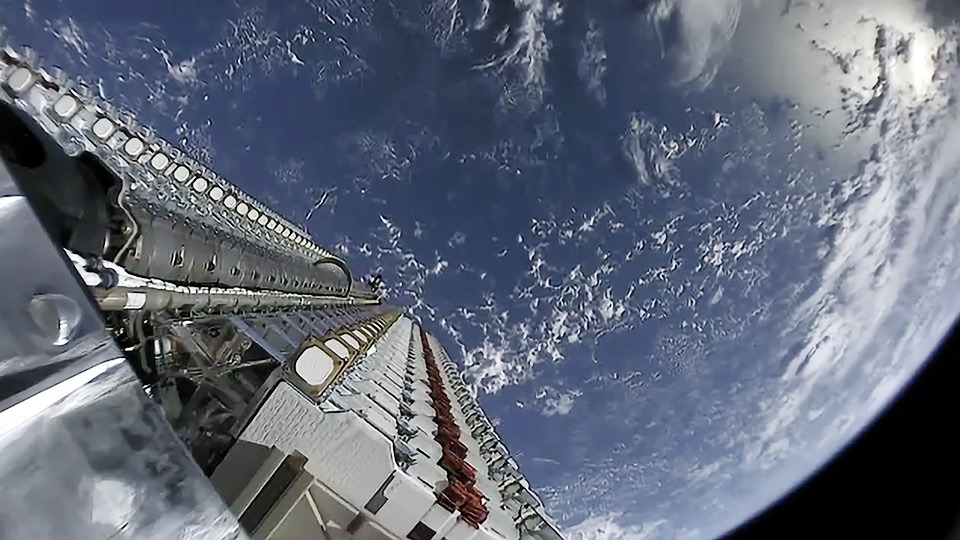
While ZSC still quietly maintains its watch on the old frequencies, Elon Musk’s Starlink satellite constellation — capable of delivering high-speed broadband to remote coastal and inland areas far beyond traditional radio reach — remains stalled in South Africa as of April 2026.
The blockage centres on the Electronic Communications Act and ICASA’s ICT Sector Code, which require 30% equity ownership by “historically disadvantaged groups” for telecom licences. Musk (born in Pretoria) has publicly criticised the policy, describing it as effectively demanding a bribe in the form of forced equity transfer. Starlink has stated it is willing to be “fully B-BBEE-compliant” once licensed and open to alternatives such as Equity Equivalent Investment Programmes (training, investment, or other contributions), but it refuses to sell equity on principle.
Communications Minister Solly Malatsi (DA) issued a policy directive in December 2025 directing ICASA to explore EEIP options. Public consultation showed strong support, yet the licence remains unresolved amid insistence from some quarters that “transformation” is non-negotiable. Starlink has even committed to a significant R500 million investment to connect 5,000 rural schools with free high-speed internet, but regulatory hurdles continue to block progress.
The contrast could hardly be starker. In the spark-gap and Morse era, South African coastal radio — led by ZSC and ZSD — earned international respect through professionalism and reliability, often in cooperation with global systems like AMVER. Today, modern satellite technology that could dramatically improve emergency communications, rural connectivity, education, telemedicine, and even extend maritime safety is held hostage by ideological requirements.
Last year in June/July I visited Victoria Falls and experienced Starlink firsthand. My notebook speed test showed a steady ~20 Mbps up and down — respectable, but more importantly, it felt consistently faster and more reliable than my FTTH connection here in Cape Town, which is supposed to be a 200 Mbps line. Meanwhile, just across the border, communities are already benefiting while South Africa debates.
Critics call it a classic case of cutting off your nose to spite your face — forgoing investment and capability in pursuit of policy purity.
Further Reading:
- The Gyrocompass - Pointing True North
- Integrated Bridge System
- Marine Engineer Evolution
- The Truck Driver Who Revolutionized Shipping
- Why the Cape Doctor Makes Saldanha South Africa’s Next Major Port
- Silvermine: South Africa’s Forgotten Underground Maritime Nerve Centre
- More on the history of Cape Town Radio
- Starlink's Efforts in South Africa
Credits
Research assistance provided by Grok (built by xAI). All facts, personal experiences, and final editing remain the responsibility of the author.
Image Credits
- Featured image: Photo from the German research vessel POLARSTERN, radio room. Hannes Grobe, Alfred Wegener Institute.
- Gemini Ai created image of a coastal radio station – unfortunately I could find absolutely nothing covering either Cape Town Radio (ZSC or Durban Radio (ZSD).
- Last image is one created by Starlink, accreditation was added beneath the image file.
[…] From Spark Gaps to Starlink Standoff: South Africa’s Coastal Radio Legacy and the Satellite Irony […]