In the same way Iscor, Armscor, Denel, Transnet and PRASA were reduced to rubble, Eskom (originally Escom) stands as perhaps the greatest let-down of all. Founded over 100 years ago by the visionary Dr. H. van der Bijl—the same man who built Iscor with his world-class credentials from Bell Labs and international expertise—Eskom was once one of the best-run power utilities on the planet: profitable, low-cost, and reliable. Today it is a shit show of note—expensive, unreliable, and blamed by some on “Apartheid” when the truth is far simpler: theft, unqualified appointments, and the same lack of foresight and accountability that sank the rest of our SOEs.
Here’s the timeline of how a global best became a national burden, hitting every pocket in South Africa and killing thousands of small businesses along the way.

Table of Contents
ToggleThe “Global Best” Era (1990s–2001)
- 1990–1994: Eskom was highly profitable and, by 1994, declared itself one of the world’s lowest-cost producers of electricity.
- 1998: Eskom explicitly warned the government that it would need more power stations by 2007 to meet demand.
- 2001: Eskom was named “Best Power Company” at the Financial Times Global Energy Awards, showcasing its efficiency and reliability.
- Early 2000s: The government rejected Eskom’s request for new funding, deciding that future capacity should be built by private investors.
This was the van der Bijl legacy in action: merit-based, technically excellent management delivering cheap, reliable power that powered industry and households alike.
The Descent into Failure (2002–2008)
- 2003–2005: Technical issues began, notably the 2003 failure at Duvha power station.
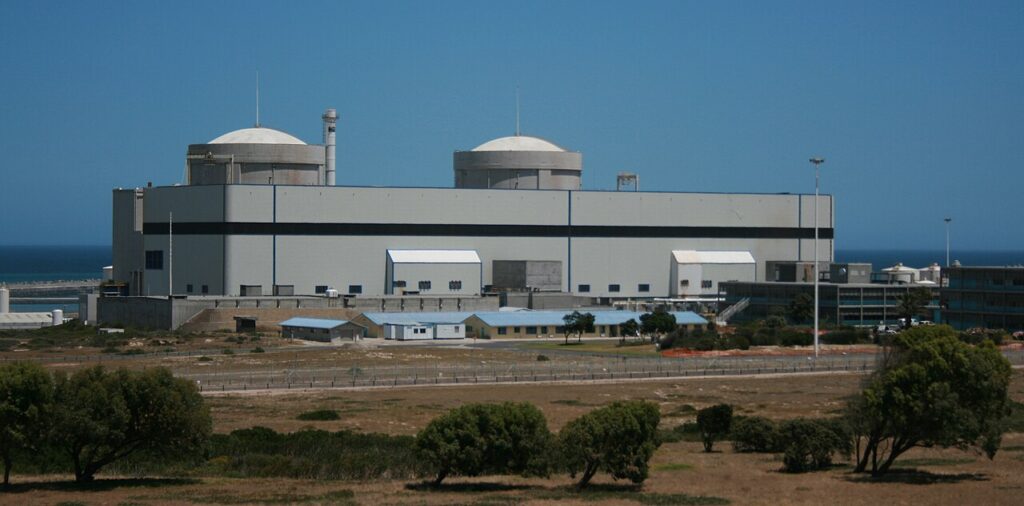
- 2005–2006: A crisis in the Western Cape (Koeberg failure/pylon fires) caused major blackouts, a precursor to national issues.
- 2007: The first sustained national “load shedding” begins as a result of generation deficits.
- 2008: The power system nearly collapses; mining firms shut down for five days, marking a severe energy crisis.
The warnings from 1998 were ignored. Instead of building new capacity, the state pinned its hopes on private investors who never materialised under the prevailing policy environment.
Crisis and Exponential Cost Increases (2009–2022)
- 2008–2010: Eskom starts a crash, high-cost “new build” program (Medupi and Kusile).
- 2007–2026: Electricity tariffs increased over 1,172% (more than six times faster than inflation, which rose only 174% in the same period), vastly outpacing inflation as Eskom sought funding for debt-laden projects and operational inefficiency.
- 2014–2015: Major failures at Majuba and coal shortages cause stage 3 load shedding.
- 2019–2022: Corruption, “State Capture” reports, and aging infrastructure culminate in severe, permanent Load Shedding (Stage 4 to 6).
- 2020: The energy availability factor (EAF) of the coal fleet plummets toward 60% and below.
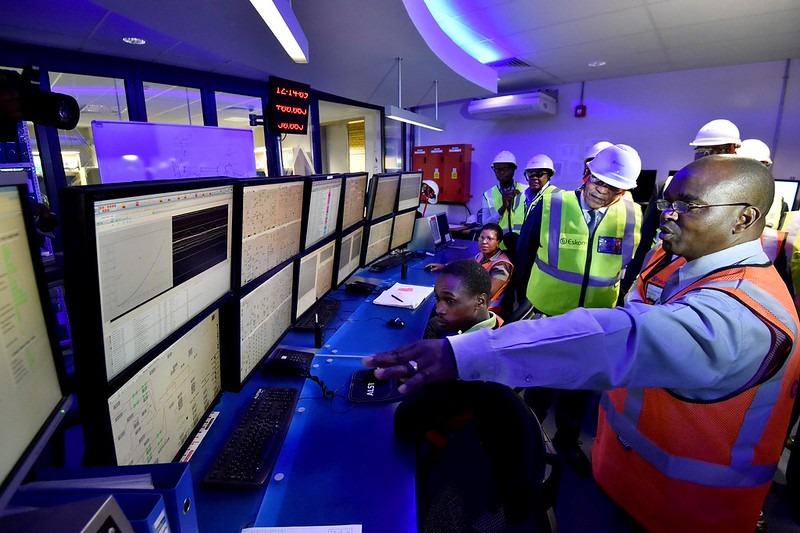
This is when the real damage was done. Billions were poured into Medupi and Kusile—projects plagued by delays, cost overruns and corruption—while maintenance was neglected. The result: the most expensive electricity in our history, delivered with the least reliability
The “Worst” and Restructuring (2022–2026)
- 2022–2023: Eskom experiences its worst-ever performance, with roughly 6,800 hours of load shedding in 2023 alone.
- 2023–2024: The government assumes a large portion of Eskom’s debt (originally R254 billion, later reduced to R230 billion) to prevent collapse.
- 2024–2026: A new management team initiates a “Generation Operational Recovery Plan”.
- 2025–2026: Load shedding is dramatically reduced—South Africa reached over 300 consecutive days without load shedding by March 2026, with the Energy Availability Factor (EAF) recovering to an average of around 65% for the 2025/26 financial year (up from the low 50–60% range in prior years). Diesel usage has fallen sharply. However, a new crisis has emerged: falling revenue and persistently high electricity prices have triggered a massive trend of customers (households and businesses) leaving the grid for solar and other alternatives. Municipalities owe Eskom over R110 billion, and the utility is now threatening to cut power to non-paying municipalities.
The Recovery Plan has delivered real operational gains—no question. But the financial hole remains enormous, and the high tariffs (8.76% increase approved for 2026/27) are driving customers off-grid faster than new capacity can be added.
Why It Collapsed So Dramatically: Sabotage, State Capture and the Coal Mafia
While some early political rhetoric blamed “apartheid sabotage,” the real drivers were documented in the Zondo Commission and subsequent court cases.
Deliberate sabotage did occur, but it was mostly criminal rather than ideological. Eskom confirmed insider sabotage at stations like Tutuka (cables cut, control pipes damaged) and Camden, where a contract worker was sentenced in early 2026 to 35 years for deliberately damaging a turbine to create repair work. Syndicates damaged infrastructure to win lucrative contracts or steal coal/diesel.
The Guptas played a high-profile role during the State Capture era (roughly 2015–2018). Gupta-linked companies, notably Tegeta, secured irregular coal contracts worth billions, including pre-payments used to acquire Optimum Coal Mine. These deals often involved low-quality or wet coal that damaged boilers and mills, worsening outages. Zondo-linked investigations estimated over R14 billion in corrupt coal-related contracts tied to the network. The Guptas influenced executive appointments (e.g., Brian Molefe) and exploited existing weaknesses.
The “coal mafia” — syndicates of truckers, mine operators, and Eskom insiders who supplied substandard coal, stole high-grade coal, or painted stones to pass as coal. This rent-seeking predated and outlasted the Guptas.
Why This Happened: From Profitable to Punishing
Dr. van der Bijl built Escom with international expertise, rigorous engineering standards, and a clear commercial mandate. The current reality—unqualified appointments, cadre deployment, and outright theft during the State Capture era—has turned that legacy upside down. The 1998 warning was ignored not because of technical impossibility, but because of political choices and a refusal to let private capital build the needed stations.
The human cost is brutal: thousands of small businesses have closed because they simply could not survive weeks or months of load shedding combined with electricity prices that have risen faster than any other input cost. Factories, shops, cold stores, and farms—all weakened or destroyed. On a per-capita salary basis, South Africa now pays among the highest effective electricity prices in the world for a service that was once the envy of
The Recent Turnaround Under Minister Dr Kgosientsho Ramokgopa
In 2023, President Ramaphosa appointed Dr Kgosientsho Ramokgopa — a civil engineer by training with additional qualifications in public administration, business leadership and a PhD — as Minister of Electricity.
Within months, visible progress emerged. The Energy Availability Factor (EAF) climbed from the mid-50s to the low-to-mid 60s percent range, with periods exceeding 70%. South Africa recorded over 300 consecutive days without national load shedding by early 2026. Diesel consumption dropped sharply, and Eskom returned to profitability for the first time in years.
The improvements came mainly from intensified maintenance on the ageing coal fleet, tighter security against sabotage and theft, and better operational discipline under the Generation Recovery Plan. Ramokgopa has also pushed smart meter rollout and a plan to eliminate “load reduction” (targeted peak-time curtailments) within 12–18 months.
Whether this stabilisation proves sustainable remains an open question — especially with ongoing municipal debt, grid defection, and rising tariffs driving customers off the grid. It does, however, show that focused execution on basics can deliver results quickly.
Personal Reflection: Time for the State to Exit Power Generation Entirely
We don’t have the qualified leadership anymore—the van der Bijl calibre of engineer-managers who put technical excellence above politics. The current government must get out of running power generation entirely, just as it must exit manufacturing, rail, and ports. Eskom’s core transmission and distribution grid can remain under state oversight for strategic reasons, but generation must be fully opened to genuine private investment and competition. Armscor-style procurement agencies and SOE monopolies have proven they cannot deliver when political loyalty trumps competence.
BBBEE mandates and the lingering threat of expropriation without compensation continue to scare off the very capital we need. History shows what visionary, merit-based leadership can achieve. State ownership without accountability has turned our industrial and infrastructure giants to rubble—and Eskom is the biggest and most painful example of all.
What do you think—can Eskom ever be fixed under continued state control, or is full private-sector participation in generation the only realistic path forward? Drop your thoughts below.
In our next article we cover this through our article: How to Fix Eskom Musk-Style: First-Principles Repairs for South Africa’s Power Crisis
Further Reading:
- The Truck Driver Who Revolutionized Shipping
- Why the Cape Doctor Makes Saldanha South Africa’s Next Major Port
- Silvermine: South Africa’s Forgotten Underground Maritime Nerve Centre
- More on the history of Cape Town Radio
- Starlink's Efforts in South Africa
- Safmarine History - Watts to Waves
- Sanctions Busters - The Rise and Fall of Iscor, Armscor, and Denel
- How Transnet and PRASA Collapsed South Africa’s Rail and Ports – From Rock Solid Pre-1994 to Total Failure
Credits
Research assistance provided by Grok xAi. All facts, personal experiences, and final editing remain the responsibility of the author.
Image Credits
- First Image – Eskom Power & Rolling Blackouts- https://www.flickr.com/photos/snapeverything/52011596145
- Medupi Power Station development of the coal yard 2014 – GNU Free Documentation License Author Catacal Rooikat
- Koeberg nuclear power station – This file is licensed under the Creative Commons Attribution 3.0 Unported license. Author Pipodesign Philipp P Egli
- Opening of Medupi Unit 6 Power Station, 30 Aug 2015 – https://www.flickr.com/photos/governmentza/21031022155