Navigating Water Scarcity - World Leaders
South Africa faces ongoing water challenges — empty dams, drought restrictions in the Western Cape, and the need for smarter irrigation amid climate variability. As someone who loves working on IoT and Smart Solutions for power management, I've seen how water security underpins everything from agriculture to industry.
It's not hard to see why the Arabic countries lead the rest of the world when it comes to fresh water generation, so I have singled them, Israel, Australia and New Zealand as being the most innovative.
Twelve years back I went to the annual Agricultural show in Bredasdorp - NAMPO is Africa's largest agricultural and trade expo. The word itself is an acronym in Afrikaans for Nasionale Afrikameel- Mielie- Produsente- Organisasie (National Maize Producers Organization). Today, it represents the entire farming sector; here I was really impressed by the Israeli and New Zealand presence. It would have been awe inspiring to have had Saudi Arabia and UAE representation of course. Here's a practical breakdown of the water scarcity problems on a global level.
Our next article will cover a desalination plant on a ship.
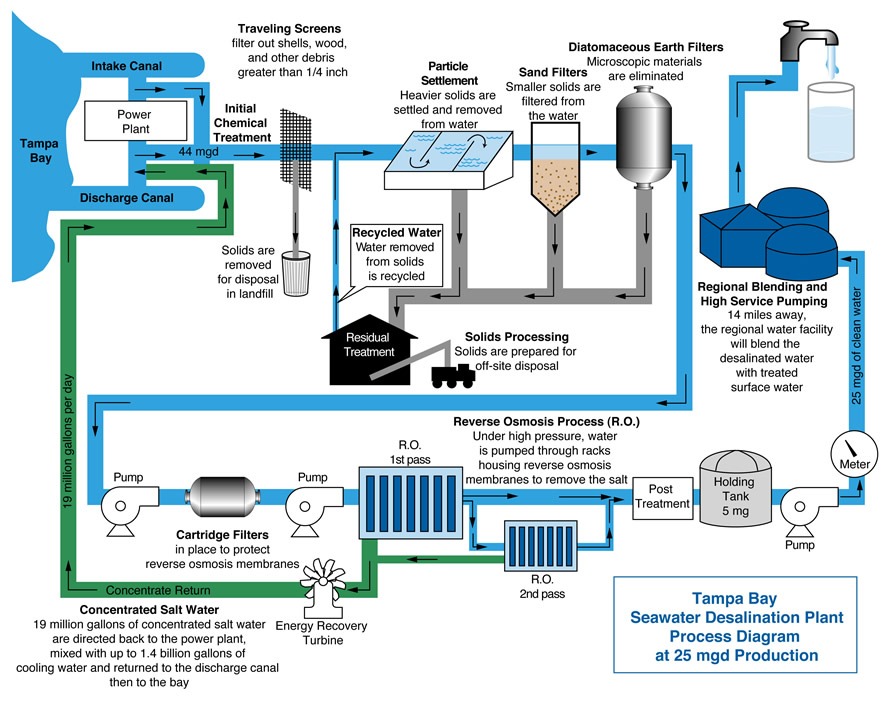
Navigating Water Scarcity - Tampa Bay Salination Plant - on the west-central coast of the U.S. state of Florida, directly connecting to the Gulf of Mexico.
1. El Niño and La Niña: What They Are and Global Impacts
El Niño and La Niña are opposite phases of the El Niño-Southern Oscillation (ENSO), a natural climate pattern in the tropical Pacific.
In our article Navigating Water Scarcity knowing the differences is very important when it comes to future endeavours.
El Niño: Warmer-than-average sea surface temperatures in the central/eastern Pacific. It weakens trade winds and shifts rainfall patterns. As of mid-2026, a new El Niño is developing and expected to strengthen into moderate or strong levels by late 2026–early 2027.
La Niña: Cooler waters, stronger winds, often following El Niño.
Affected regions and expectations (2026–2027 outlook):
Drier conditions (drought risk):
Southern Africa (including SA), Australia, Indonesia, Philippines, parts of South America (e.g., Amazon), and southern US.·
Wetter conditions (flood risk):
Eastern Africa, northern South America (Peru/Ecuador), southern US, and parts of East Asia.·
Timing:
Effects often peak in Southern Hemisphere summer (Dec–Feb) for SA/Australia. The developing 2026 El Niño could bring drier conditions to the Western Cape into 2027, exacerbating drought risks.These cycles interact with climate change, making extremes more intense.
Navigating Water Scarcity - Recent major droughts (examples):
South Africa:
Severe 2015–2018 "Day Zero" crisis in Cape Town; ongoing regional issues.
Australia:
Millennium Drought (1997–2009); repeated dry periods in Murray-Darling Basin.
New Zealand:
Regional droughts in Canterbury and elsewhere, though generally wetter overall.
Indonesia/Philippines:
Frequent El Niño-linked droughts affecting agriculture.
South America (Amazon):
Severe droughts in 2023–2024 and earlier.
USA: Ongoing issues in Southwest/California; Southern Plains droughts.
Europe: 2022 record drought across much of the continent (rivers at historic lows).
Russia: Severe droughts in southern agricultural regions in recent years.
2. Harvesting Fresh Water When Dams Are Empty
When dams run low, practical alternatives based on a proactive outlook to navigating water scarcity include:
Rainwater harvesting: Simple roof/gutter systems into tanks with first-flush diverters and filters. Low-cost and effective during rains.
Greywater recycling: Reuse shower/sink water for irrigation. Basic treatment usually involves filtration + disinfection (e.g., chlorine or UV) to remove soaps, organics, and pathogens. Advanced systems add biological treatment.
Atmospheric water generation (AWG): Machines or passive collectors that condense humidity from air (fog nets, dew collectors, or solar-powered units). During Cape Town's restrictions, fog nets and small AWG units were trialled. They work by cooling air below dew point (using refrigeration or desiccants) to condense vapour. Effective in humid/coastal areas; solar versions suit off-grid farms.
Groundwater boreholes and efficient drip irrigation to stretch resources.
Israel's leadership in drip irrigation: Pioneered in the 1960s, it delivers water directly to plant roots via tubes with emitters, reducing evaporation and runoff by 30–50%+ compared to flood/sprinkler methods. Combined with sensors for precision (soil moisture, weather data), it maximises yield in arid conditions.On-farm solutions like solar geyser/pump setups integrate well for irrigation boosts.
3. How Saltwater-to-Freshwater Converters (Desalination Plants) Work
Most modern plants use Reverse Osmosis (RO):
Seawater is pre-treated (filters remove debris).High-pressure pumps force it against a semi-permeable membrane. Water molecules pass through; salts and impurities are blocked and flushed as brine.Post-treatment: Remineralisation and disinfection for safe drinking/ag use.
Pros: Reliable, weather-independent supply. High purity output. Scalable with improving energy efficiency.
Cons: High energy use (though renewable integration helps). Expensive infrastructure and brine disposal (environmental impact on marine life). Not ideal for inland areas due to transport costs.
Power requirements example (for a 50–70 million litres/day plant like Cape Town's proposed Paarden Eiland): Roughly 3–5 kWh per cubic metre (m³) for modern RO, so ~150–350 MWh/day total (equivalent to a small power station output). Onsite generation (gas, solar + storage, or hybrid) is essential given Eskom challenges. Brine management and grid integration add complexity.
Cape Town's desalination context: Temporary plants were built during the 2015–2018 crisis but mostly decommissioned post-drought as costs were high and rainfall returned. The permanent Paarden Eiland project (50–70 Ml/day) is in planning/procurement for 2026+ start, driven by forecasts of future droughts. Delays stem from funding, tariffs, environmental concerns, and shifting priorities.
4. How Saudi Arabia and the United Arab Emirates Solved Their Water Problem
Both nations turned to massive desalination investment due to extreme aridity:
Saudi Arabia: World's largest producer, with plants like Ras Al Khair (over 1 million m³/day) and Jubail facilities. Heavy reliance on thermal + RO, supported by oil/gas energy. Vision 2030 includes more solar-powered plants.
UAE: Dubai's Jebel Ali and Taweelah plants are among the largest globally (hundreds of thousands m³/day each). They supply ~95%+ of Dubai's water. Focus on efficiency upgrades and renewables (e.g., Hassyan solar-powered project).Abundant energy resources enabled scale; both now lead in total capacity.
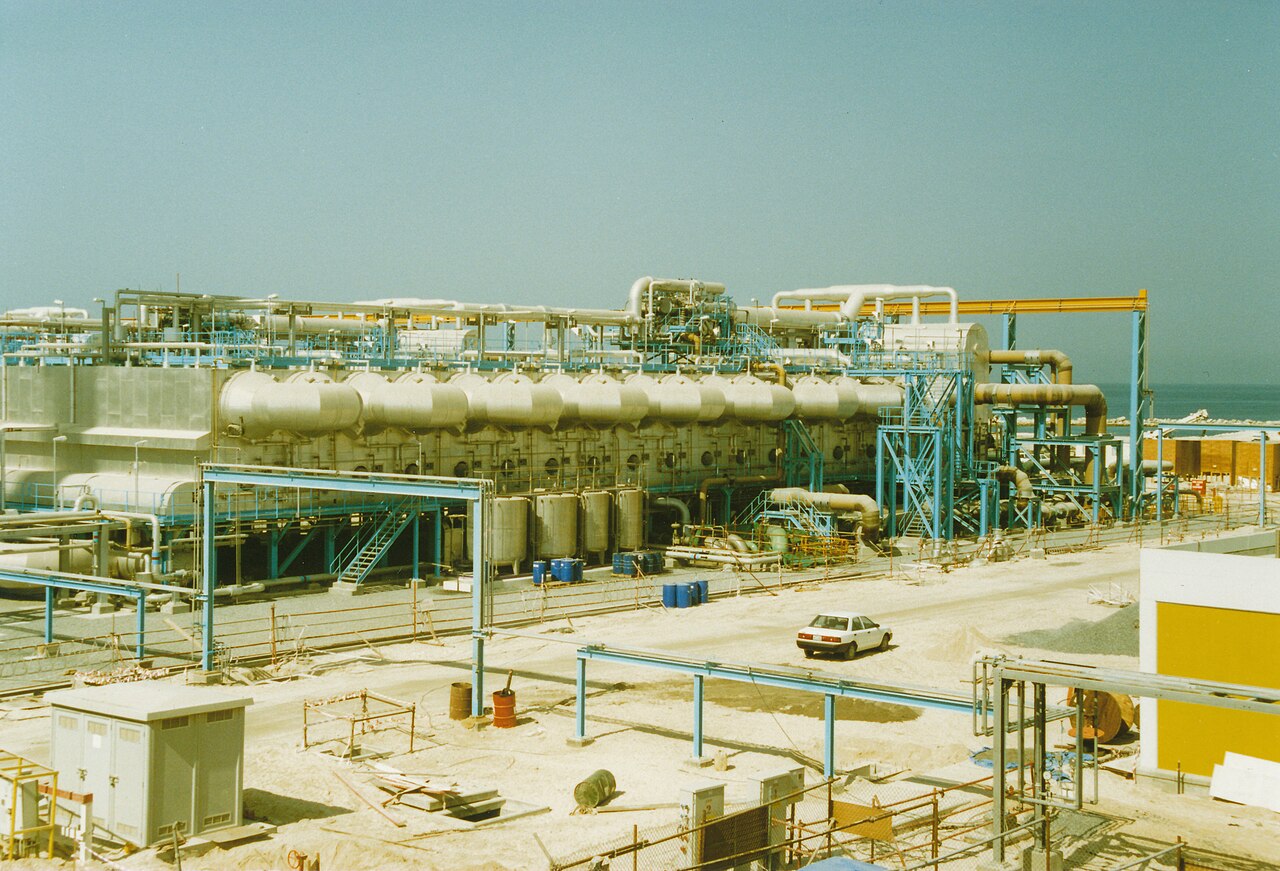
Navigating Water Scarcity - Jebel Ali is a major industrial and port district in the Emirate of Dubai, United Arab Emirates (UAE). It sits along the southern coast of the Persian Gulf, about 35 kilometers southwest of central Dubai.
5. Israel's Remarkable Freshwater Success in an Arid Region
Israel transformed from water scarcity to exporter through necessity and innovation.
Key steps:
Massive investment in desalination (five major seawater RO plants supply ~50–80% of domestic water). Wastewater recycling (up to 90% reused for agriculture).National Water Carrier + smart distribution. Drip irrigation and precision agriculture (sensors, automation).By treating desalination as national infrastructure with long-term guarantees, they achieved water security despite arid conditions.
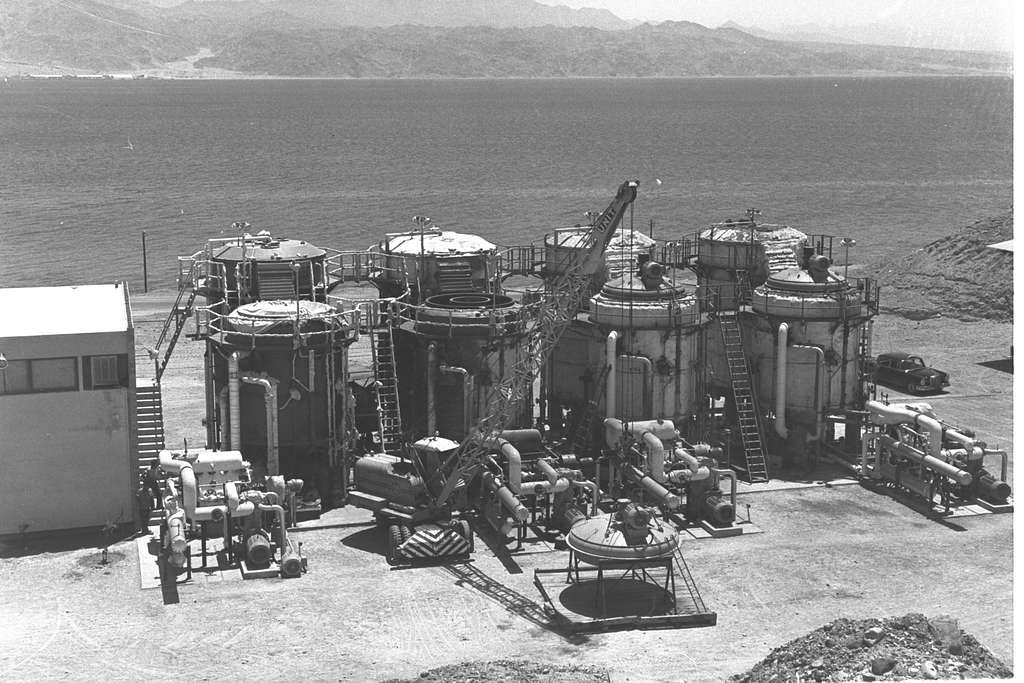
Navigating Water Scarcity - Eilat, Israel - on the shores of the Red Sea
6. Why Saudi Arabia, UAE, Israel, New Zealand, and Australia Lead in Freshwater Generation
Saudi Arabia: Sheer scale of desalination + integration with energy infrastructure.
UAE: Innovative large plants + urban efficiency (Dubai's model).
Israel: Efficiency, recycling, and ag-tech leadership.
New Zealand: Catchment management and sustainable irrigation.
Australia: Policy reforms (water trading), desalination in cities, and climate adaptation research.
All emphasise innovation over rainfall dependence.
Case History: Port Elizabeth (Gqeberha) – Eastern Cape South Africa
Port Elizabeth (Gqeberha) is no longer in a "massive drought" crisis like the 2015–2018 period (similar to Cape Town's Day Zero), but water security remains a concern with ongoing challenges. Here's the current picture (as of mid-2026) and how they managed it, plus the Gift of the Givers story.
Current Water Situation in Gqeberha
The metro has recovered from the worst of the drought thanks to better rainfall in recent years, dam level improvements, and infrastructure investments.
However, periodic restrictions, ageing infrastructure leaks, and climate variability still create pressure — it's not "solved" but stabilised compared to the peak crisis.
Dam levels fluctuate seasonally; the system is better managed but vulnerable to future dry spells (linked to El Niño patterns).
How They Overcame the Acute Scarcity
Short-term measures during the height:
Strict restrictions, public awareness campaigns, borehole drilling, and temporary desalination plants (similar to Cape Town).
Longer-term:Upgrades to existing dams and pipelines.Groundwater exploration and boreholes.Wastewater recycling and reuse projects.Demand management (leak fixes, metering).Unlike Cape Town's stalled permanent desalination, Gqeberha focused more on diversified sources (dams + groundwater + recycling) rather than massive new sea plants.
Gift of the Givers' Success in Finding Water
The South African humanitarian organisation Gift of the Givers gained fame for drilling successful boreholes in drought-hit areas (including Eastern Cape) where government efforts often failed.
Key reasons:
Community-driven intelligence: They work closely with locals who know historical water sources, old wells, and underground indicators that official surveys might miss.
Agile & persistent approach: Faster decision-making, willingness to drill in "non-standard" locations based on traditional knowledge + basic geophysical tools. They use experienced teams and keep trying multiple sites.
No bureaucracy: Government agencies often face red tape, budget limits, and standardised (sometimes outdated) mapping. Gift of the Givers operates on donations and urgency, allowing quicker action.
Results: They delivered water to thousands during crises, with some boreholes yielding sustainable supply. Not magic — just practical, ground-level execution combined with local insight.
Key Takeaways
A major obstacle in the Port Elizabeth/Gqeberha case was the apparent lack of urgency and proactive planning by authorities, despite known regional dry cycles and historical patterns. Warnings about potential drought impacts were available well in advance, yet response often felt reactive — heavy on restrictions once dams were critically low, lighter on pre-emptive infrastructure like permanent desalination or widespread recycling. This compounded challenges and placed extra burden on communities and organisations like Gift of the Givers. It underscores a broader point: technology and global best practices exist, but execution and accountability at the planning level are equally critical.
Tying It Together for South Africa
We can draw lessons: Combine desalination where viable (coastal plants), aggressive rainwater/greywater harvesting, smart irrigation from global leaders, and supplier networks for parts (hoses, pumps, seals). Platforms like Parts-Ring can connect users to these technologies and spares.