Table of Contents
ToggleIntroduction: Our Programming Education Evolution
I thought it pertinent to write an article for Parts-Ring covering my own endeavours and experience within the IT sector. I was always on the outskirts and never actually in the IT industry, company focus was on the hardware side and there was a dedicated IT head. Much of what has been written here is in response to the questions the youngsters used to pose to me and the heavy lifting was done by Grok xAi.
Twenty-six years ago, in 2000, a first-year Computer Science student in South Africa or elsewhere typically began with Turbo Pascal (or similar procedural languages). The focus was on structured programming, algorithms, and low-level understanding. Assembly language was common for grasping computer architecture. A curious learner like myself paid around R4000 for a distance learning C programming course — excellent material, but expensive at the time. Remarkably, equivalent content was freely available on sites like “How Stuff Works.”
Today, in 2026, the curriculum has transformed dramatically. Python dominates introductory courses worldwide due to its readable syntax and immediate applicability. AI and no-code tools are reshaping who can build applications. Yet foundational skills remain essential. This article explores these changes for high school pupils entering the field, university students, and adult hobbyists or career-changers.
Evolution of First-Year CS Curriculum (2000 vs. 2026)
Early 2000s: Emphasis on procedural languages (Pascal, C), manual memory management, and hardware fundamentals. Assembly was taught to demystify how computers work at the lowest level.
Current Era: Most universities start with Python for its accessibility. South African institutions like Wits University introduce algorithms, data structures, and basic computer organisation early, often with Python or Java. High school curricula (e.g., Coding & Robotics under CAPS: Curriculum and Assessment Policy Statement) use block-based tools and simple Python, integrating electronics via Arduino/Raspberry Pi.
Programming education evolution flowchart 2026

Key Skills for Newcomers (High School Level): Prioritise computational thinking, logic, problem decomposition, and debugging over syntax. Start with quick feedback loops to maintain motivation.
Recommended Languages and Their Roles
Top Five Languages to Learn in 2026:
- Python — Prime usage: AI/ML, data science, automation, scripting, web backends.
- JavaScript/TypeScript — Web development (frontend & backend), interactive apps.
- Java or C# — Enterprise systems, Android (Java), Microsoft/.NET ecosystem (C#).
- C++ — High-performance applications, games, embedded systems, IoT/robotics.
- SQL — Database management (pairs with all others).
Python in AI: While core LLM engines rely on C++ for performance, Python is the dominant language for AI development, training, and application. Libraries like PyTorch and TensorFlow make it the practical choice.
C++ for Mechatronics, IoT, and Robotics: These fields demand efficiency, real-time control, and low-level hardware access. Devices have limited resources, making C++ ideal for deterministic performance where Python would be too slow.
Progression Advice:
- Beginners / Pupils / Hobbyists: Start with Python.
- Engineering Paths (Mechatronics/Robotics): Introduce C/C++ alongside Python early.
- From C (as I did in 2000), the natural next step is C++ or Python for productivity.
Microsoft Developers: Primarily C# within the .NET ecosystem.

Electronics Curriculum: Pupil vs. Student
High School (Pupil): Focus on practical projects — basic circuits, sensors, microcontrollers (Arduino), and Python/block-based programming for robotics. Goal: Spark interest through making.
University (Student): Deeper theory in circuits, signal processing, embedded systems, control theory, and PCB design. Programming includes C/C++ for firmware and Python for higher-level integration.

Pascal is an imperative and procedural programming language, designed by Niklaus Wirth as a small, efficient language intended to encourage good programming practices using structured programming and data structuring. It is named after French mathematician, philosopher and physicist Blaise Pascal. From Wikipedia
The AI Revolution in Development
Non-programmers can now build functional desktop, mobile, web, and tablet applications using AI-powered no-code/low-code platforms (e.g., Bubble, Glide, or natural language tools from major vendors). Describe your idea — AI generates code, UI, and logic. This is revolutionary for rapid prototyping and MVPs.
However, programmers and AI specialists remain at the top. They design, validate, optimise, and ensure ethical deployment of these systems. Fully unsupervised AI capable of complex, reliable engineering is still speculative.
Personal Reflection and Advice
In 2000, paid courses were often the only structured option. Today, high-quality education is abundant and mostly free. The barrier to entry has never been lower — what matters is consistent practice and building real projects.
Further Reading and Resources
Free Training Courses (Highly Recommended):
- Harvard CS50P (Python) — Excellent academic introduction.
- freeCodeCamp — Scientific Computing with Python (certificate included).
- University of Helsinki MOOC — Rigorous Python course.
- Scrimba Learn Python — Interactive and free.
- Khan Academy / Codecademy — Beginner-friendly intros.
- Python.org official tutorial.
- roadmap.sh — Visual developer roadmaps.
Top Udemy Courses (Often on Sale for ~R200–R300):
- 100 Days of Code: The Complete Python Pro Bootcamp by Angela Yu (best for absolute beginners).
- Complete Python Bootcamp by Jose Portilla.
- Courses on C++, Robotics with Arduino/Raspberry Pi, and AI/ML with Python.
- Parts-Ring – Tech Generational Leaps: Why Pioneers arrive in Bursts
- Texas Instruments: The Legend That Keeps Hard-to-Find Parts Alive in 2026
- How Intel Lost Its Way and How They Are Planning to Make a Comeback
- ARM Hard to Find Parts: The Invisible Giant Powering Modern Electronics in 2026
Other Recommendations: Official documentation, YouTube channels (Corey Schafer, Sentdex), and GitHub for open-source projects.
This guide aims to complement — not repeat — generic web advice by blending historical perspective, South African context, practical pathways, and the realities of the AI era. The most important language skill remains adaptability
Technical Credits & Research
- Featured Image: Photograph of the creators of Unix : Ken Thompson (left) and Dennis Ritchie (right) – this has been enhanced by PicsArt to get more detail and colorizing. This file is in the public domain because This document (the Jargon File) is in the public domain, to be freely used, shared, and modified. Unknown author.
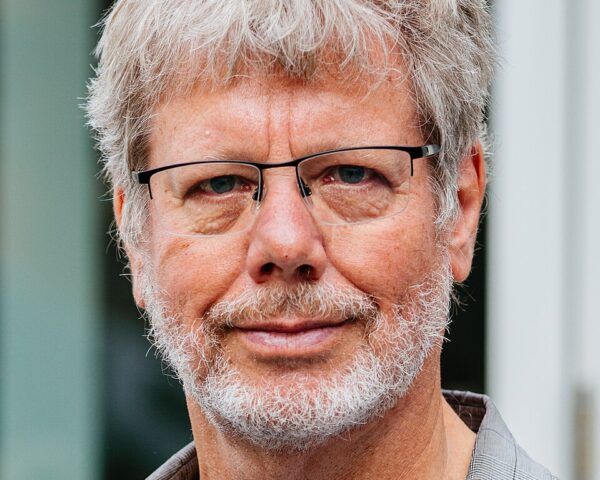
- Guido van Rossum in PyConUS 24. This file is licensed under the Creative Commons Attribution-Share Alike 4.0 International license. Author Kushal Das
- James Gosling is widely credited as the creator and “father” of the Java programming language. He led a small team of researchers—often called the “Green Team”—at Sun Microsystems that developed the language in the early 1990s. This file is licensed under the Creative Commons Attribution-Share Alike 4.0 International, 3.0 Unported, 2.5 Generic, 2.0 Generic and 1.0 Generic license. Author Peter Campbell
- Niklaus Wirth giving a lecture in Ural State University. The copyright holder of this work allows anyone to use it for any purpose including unrestricted redistribution, commercial use, and modification. Author Tyomitch
- Research: Technical assistance and cross-referencing provided by Grok xAI.
- Editorial: All case study data, circuit designs, and final editorial decisions are the sole responsibility of the author to ensure technical accuracy.