The Chinese Manufacturing Revolution – I have long followed Behringer as the company that took Bob Carver’s garage-rebel spirit and scaled it to the masses. Where Carver proved you could build blistering power amps on a budget using clever circuits and off-the-shelf parts.I have long followed Behringer as the company that took Bob Carver’s garage-rebel spirit and scaled it to the masses. Where Carver proved you could build blistering power amps on a budget using clever circuits and off-the-shelf parts, Behringer went further — making pro-audio tools genuinely affordable for working musicians, bedroom producers, and small venues. As someone who has owned (and had to shelf) an iNuke 4000 series amp, I know the mixed feelings firsthand: when it worked, the quality and punch were phenomenal. When it failed, it joined the chorus of reliability complaints. But that debate — budget-conscious engineering or simply exposing how high the old mark-ups really were — sits at the heart of Behringer’s story.
For young South Africans and global tinkerers entering electronics, Behringer shows what happens when you democratise pro gear: you change who gets to play. At the bottom of the article there is a video compiled by Sweetwater in an interview with the man himself, Uli Behringer.
Table of Contents
ToggleBehringer Innovation Timeline: From German Garage to Music Tribe City
Chinese Manufacturing Revolution
Late 1980s–1990s: German Roots, Chinese Pivot
- 1989: Founded on 25 January in Willich, Germany, by Swiss-German engineer Uli Behringer. As a struggling musician and sound engineer, he couldn’t afford pro studio gear — so he started building his own.
- Early products (compressors, exciters) were made in Germany but used Chinese components.
- 1990: Production shifted to mainland China to slash costs. Uli moved to Hong Kong in 1997 to oversee quality directly.
- 2002: Opened their own wholly-owned factory in Zhongshan, Guangdong — “Behringer City” (later Music Tribe City). This self-contained campus with housing for thousands of workers became a manufacturing powerhouse.
2000s–2010s: Explosive Growth & Game-Changing Products
- Acquired or partnered with premium brands (Midas, Klark Teknik, TC Electronic, Turbosound).
- EUROPOWER EP series (including the EP4000) and A500 — affordable, high-power amplifiers that became workhorses for live sound.
- iNuke series (Class-D lightweight amps) — massive power density at rock-bottom prices.
- 2012: Launched the X32 digital mixing console — 40-input, Midas-designed preamps, motorised faders, and full digital processing at a fraction of the cost of high-end consoles. It won awards and became the best-selling digital mixer ever.
2020s–Present (2026): Music Tribe Era
- Now part of privately held Music Tribe (formerly MUSIC Group). Uli Behringer remains deeply involved.
- Massive, highly automated factory complex in China (essentially controlling its own industrial suburb).
- Continued expansion into affordable synths, effects, and digital mixers while refining reliability.
Big Hits & What Musicians Actually Think
Behringer’s success formula is simple: deliver 80–90% of the performance of premium gear at 20–30% of the price.
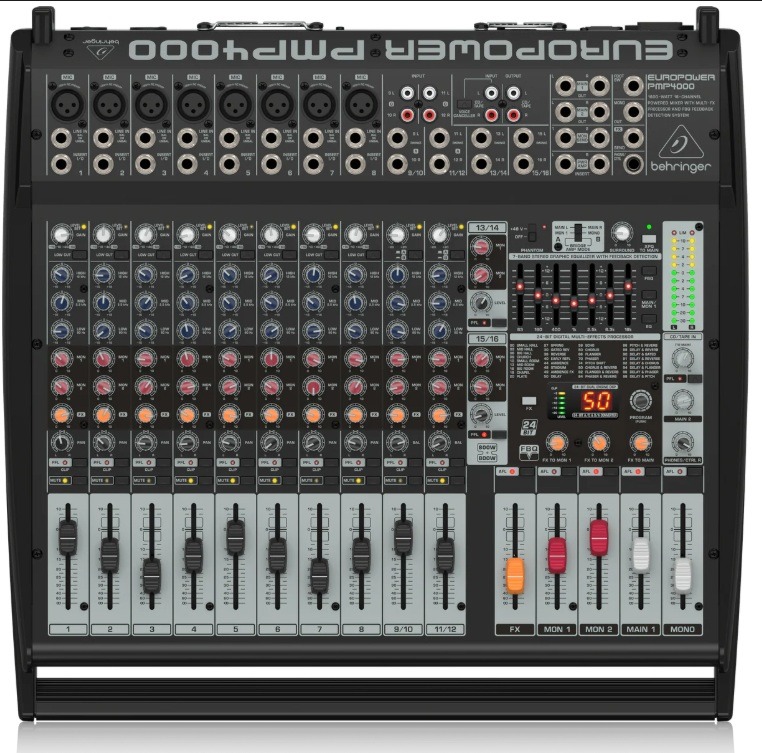
- EP4000 & A500 — Rugged, loud, and reliable enough for many club and rehearsal-room rigs. Musicians praise the value and low-frequency punch, though some note they run hot under sustained heavy use.
- iNuke series — Lightweight Class-D powerhouses that amazed users with their efficiency — until power-supply or thermal issues appeared after a few years of gigging. (Exactly as I experienced with my own 4000.)
- X32 digital mixer — The breakout star. Still going strong in 2026, it’s loved by churches, small-to-medium venues, worship bands, and semi-pro acts for its feature-packed console at an unbeatable price. Eight-year owners call it a “workhorse” that transformed live mixing for budget users.
Musician sentiment is split but honest: “Phenomenal when it works, frustrating when it doesn’t.” The gear earns respect for opening doors that used to be closed by high mark-ups. Many say Behringer exposed how much “premium” brands were charging for the same basic audio engineering. Warranty handling (1–3 years, extendable by registration) is functional but can feel slow for China-based service — a practical trade-off for the low price.

Arguably one of the best products from the Behringer listing – ultra reliable and very popular, the EP4000.
Famous Users & the Carver Connection
Behringer gear is more “working musician” than stadium headliner, but the X32 especially has been road-tested by:
- Daya (on tour with FOH engineer Corey Lynn Carter)
- Midge Ure (Ultravox)
- Various acts at iconic venues like Whisky A Go Go
- Countless worship/live-sound engineers and smaller pro tours
Bob Carver started the affordable-power revolution with his Phase Linear “Flame Linears.” Behringer polished and scaled it — using modern Class-D tech, Midas preamps, and ruthless cost control in their own Chinese factory. They turned Carver’s garage ethos into an industrial empire.
The Controversies: Reliability, Warranties & “Copying”
Critics often point to reliability issues (failed iNukes, thermal shutdowns, occasional early failures) and the company’s aggressive reverse engineering of successful designs. Lawsuits or threats from Peavey, Roland, Klon, and others have accused Behringer of cloning pedals, mixers, and circuits.
Uli Behringer’s defence has been consistent and pragmatic: blatant 1:1 copying is illegal, but reverse engineering and benchmarking are normal parts of product development and healthy competition. (Ok, I added that part but engineering of all manner does include copying, why reinvent the wheel). He argues that an audio amplifier (or compressor, or synth voice) is fundamentally an audio amplifier — the underlying engineering principles have been known for decades, and once patents expire, improving affordability is fair game. “Why reinvent the wheel when you can make it accessible to more musicians?” is the spirit behind the approach. The result? Pro tools that once cost thousands are now within reach of teenagers with bedroom studios or small South African bands.
Profitability comes from high volume, tight vertical integration in their own Chinese factory, and accepting that warranty claims are part of the low-price model. It’s a deliberate trade-off: lower margins per unit, but far more units sold and a much larger community of users who can now create music.
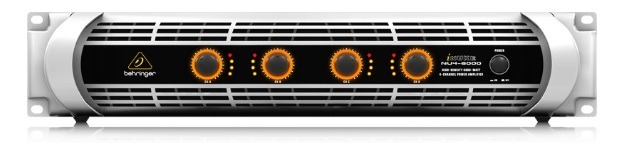
The iNuke NU4-6000 series was plagued by a diode that failed in the PSU which came from a faulty batch. CEO Uli Behringer came to the company’s defense and through this, bought a lot of customer loyalty. Anyone if the electronics profession will know that faulty batches are seen everywhere, from fashion to automotive. (The link above will take you to Sound Forums
Where Behringer Stands Right Now (April 2026)
Behringer operates as the flagship brand under Music Tribe, with a vast, automated factory complex in Zhongshan that gives them end-to-end control. They continue to release affordable digital mixers, power amps, synth clones, and effects while quietly improving reliability through better components and automation.
In short, Behringer did what Bob Carver dreamed of on a global scale: they made serious audio accessible. Like Philips pruning to health tech and Sony pivoting to entertainment ecosystems, Behringer focused relentlessly on democratisation. The reliability debates and IP controversies are real, but so is the impact — thousands of musicians who could never afford the “premium” gear now create, perform, and sound professional.
This resilience and practical innovation is what makes the story compelling for anyone with a soldering iron, a tight budget, and big ideas. It closes our series perfectly: from Dutch light-bulb precision (Philips) and Japanese standards (Sony) to American garage power (Carver) and Chinese-scale accessibility (Behringer). The thread? Clever engineering that puts tools in more hands.