South Africa Data Centres - follow up to AI’s Water and Power Backlash
Table of Contents
ToggleA follow-up to my piece on AI’s water and power backlash — this time turning the lens on South Africa’s own data centre industry, and the Johannesburg power and water crises operators had to engineer their way around.
My last article used my own suburb of Brackenfell in Cape Town, South Africa as a case study for why AI infrastructure lands where it does. That got me curious about the bigger national picture: how many data centres does South Africa actually have, why did they end up where they did, and — given everything Johannesburg has been through with Eskom and Rand Water — how are operators keeping facilities running there at all? The answers turned out to be more interesting than I expected, and they reshape how I think about the Brackenfell angle too.
How Many Data Centres Does South Africa Have, and Where
Counts vary depending on who’s counting and what they include, but the shape of the South Africa Data Centres market is consistent. Data Center Map currently tracks 63 facilities from 41 operators; industry research firms put the figure closer to 55 existing sites plus another 6 in the pipeline. Johannesburg dominates with 36 facilities, Cape Town has 13, Durban 7, Pretoria 4, and Bloemfontein, East London and Port Elizabeth one each.
The market splits into three layers. Carrier-neutral colocation is the backbone: Teraco (majority-owned by US REIT Digital Realty) is the dominant player, running JB1 through JB5 plus a Teleport site in Johannesburg, CT1 and CT2 in Cape Town — the one near me in Brackenfell — and DB1 in Durban.
Africa Data Centres (owned by Cassava Technologies), Open Access Data Centres, and Vantage Data Centers round out the major independents. Above that sit the hyperscale cloud regions — AWS’s Africa region in Cape Town with three availability zones, Microsoft Azure in Johannesburg and Cape Town, and Google Cloud in Johannesburg — which mostly lease space inside those same colocation campuses rather than building standalone. Below it all is a layer of smaller bank-, telco- and corporate-owned enterprise and edge sites.
Why Here: POPIA and the Push for Data Sovereignty
In my research as to how much South Africa’s POPIA (Protection of Personal Information Act) had to do with the amount of South Africa data centres popping up, I did find that legislation plays a big part of the story, though it’s more a “strong incentive” than outright legal mandate. POPIA doesn’t flatly require personal data to stay on South African soil — it requires that if data leaves the country, the receiving jurisdiction offers adequate protection.
In practice, that’s often easier to demonstrate by simply keeping the data local, which is exactly what banks, insurers, healthcare providers and government departments started doing once POPIA took full effect in 2021. Layer on the Reserve Bank’s cloud-computing guidance for financial institutions and the Information Regulator becoming genuinely active with enforcement, and regulated industries had real commercial pressure to demand in-country cloud and colocation.
That’s a significant part of why AWS, Azure and Google all eventually stood up local regions instead of serving South Africa out of Europe.
Johannesburg Has the Traffic, Cape Town Has the Cables
So why are South Africa data centres mainly concentrated around Johannesburg considering it has water and power problems? Why not Cape Town?
Cape Town’s connectivity is genuinely excellent — Melkbosstrand, just north of the city, is a major subsea cable landing station for SAT-3/WASC, SAFE, and Google’s own Equiano cable. It’s one of the best-connected points on the continent.
What Johannesburg has instead is peering density: NAPAfrica, hosted inside Teraco facilities in Johannesburg, Cape Town and Durban, is Africa’s largest internet exchange point, and Johannesburg is where the bulk of that traffic actually gets exchanged, simply because that’s where the country’s economic and enterprise demand is concentrated.
Cape Town isn’t fibre-poor at all — Johannesburg is just the traffic hub because it’s the economic centre, which is the real reason it carries more than half the country’s data centres despite everything else working against it.
The Power Crisis, and How Operators Sidestepped It
Operators didn’t wait for Eskom to solve load shedding. They privatised their own slice of the grid instead. Teraco is building a 120MW solar farm in the Free State and wheeling that power through the grid to its campuses — a practice the City of Cape Town has publicly confirmed it supports for high-energy users.
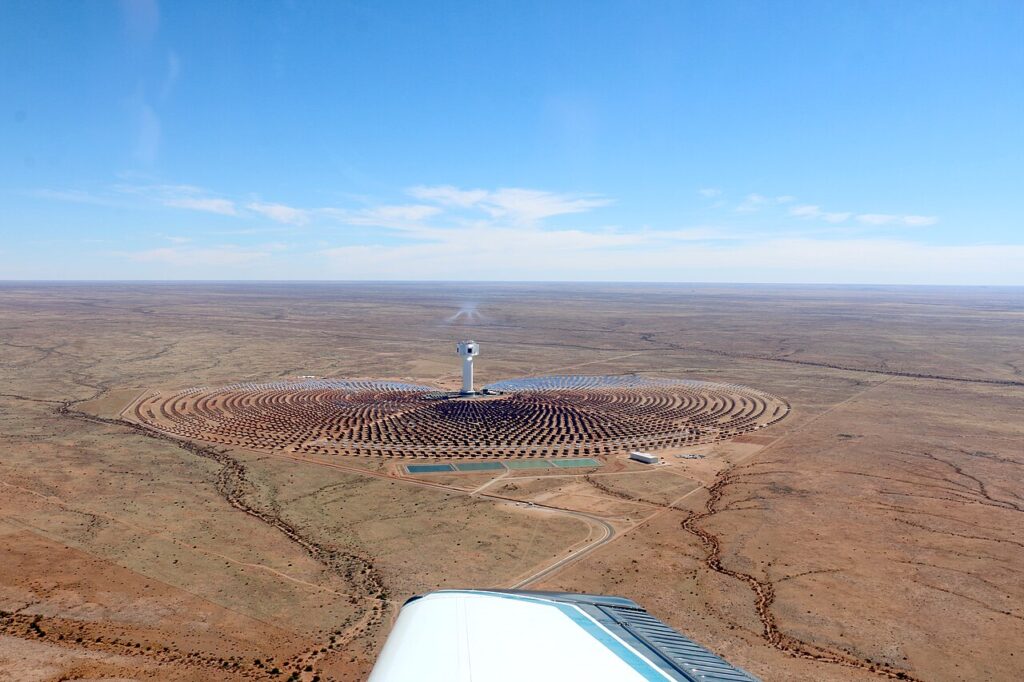
AWS started this trend back in 2021 with a 10MW solar plant near Kathu in the Northern Cape, built specifically to power its Cape Town operations, which I hadn’t come across before researching this. (At least that part of Kathu – the larger section delivers 100MW to the grid).
Vantage secured an 87MW power purchase agreement with SolarAfrica for its Waterfall City campus, and Africa Data Centres broke ground on a 12MW solar farm near Bloemfontein to offset its Cape Town site and future Johannesburg expansions.
None of that replaces backup power, though. Every facility still runs fleets of diesel generators to guarantee the 99.999% uptime they sell clients, and Johannesburg specifically has access to gas turbines as an alternative that other cities don’t.
There’s even serious industry talk of nuclear power as the only realistic way to guarantee genuinely clean, 24/7 baseload for AI training clusters, since solar plus battery storage can’t do that alone.
It hasn’t all been clean going: Africa Data Centres got caught having quietly expanded diesel generator capacity at its Midrand campus past the 10MW threshold that triggers mandatory environmental authorisation under NEMA, and had to retroactively legalise the expansion. So the honest picture is real renewable investment layered over a system that’s still fundamentally diesel-and-grid-wheeling dependent underneath the sustainability messaging — “eliminated” is a bit generous; “engineered around” is closer to the truth.
The Water Crisis, and How It Was Mostly Designed Out
Johannesburg’s water crisis is severe in its own right — Rand Water has warned of system collapse, 28 of 61 reservoirs and towers in the metro have been critically low or empty at various points, and the city’s non-revenue water sits at nearly 45%, leaving Johannesburg billions in arrears to its bulk supplier. But it turns out this matters less to modern data centres than you’d expect. Most facilities built in the last several years, including Teraco’s, use closed-loop cooling that’s filled once during construction and recirculated indefinitely rather than the old evaporative systems that constantly drew fresh water to cool by evaporation. That single design shift is what genuinely insulates newer builds from the municipal crisis — it’s the same shift happening globally that I covered in the last article.
It’s not a complete solution, though. Some operators supplement with boreholes, and that’s controversial in its own right: Gauteng residents have drilled an estimated 10,000 boreholes into the same shared aquifer over the past decade, so pulling groundwater doesn’t eliminate the strain, it just relocates it underground where it’s harder to see. The fairest way to put it: closed-loop cooling genuinely reduced data centres’ exposure to Johannesburg’s water crisis, but it didn’t remove data centres from the water equation entirely.
What It Means for Brackenfell
Coming back to my own backyard: Brackenfell never had to engineer around a crisis the way Johannesburg operators did, because the Western Cape simply wasn’t in the same position.
Teraco’s CT2 facility here benefits from the same wheeling and closed-loop design principles as the Johannesburg campuses, without the added pressure of an unstable municipal water and power supply sitting directly underneath it.
That’s arguably the quieter reason Amazon and Teraco were comfortable putting serious capital into Brackengate: not just the three-phase power surplus and fibre I mentioned last time, but a host city that wasn’t simultaneously fighting a grid collapse and a reservoir crisis.
Johannesburg still wins on raw interconnection density, but Cape Town’s operational stability might be worth more to an operator’s risk committee than a few extra hops on the peering exchange.
Further Reading
- Amazon procures record amount of renewable energy https://baxtel.com/news/amazon-procures-record-amount-of-renewable-energy
- AI’s Water and Power Backlash: Have We Not Seen This Movie Before?
- South Africa Data Centers — 63 Facilities from 41 Operators
- Johannesburg Data Centers — 36 Facilities from 14 Operators
- Data Centre Locations in South Africa — Teraco
- Cape Town Data Centres: CT1 & CT2 — Teraco
- South Africa Colocation Data Center Portfolio Analysis Report 2025
- Navigating the Tightrope: Data Governance as South Africa’s Compass for Data Localisation & POPIA Compliance
- South Africa’s data sovereignty laws and regulations — InCountry
Technical Research and Image Credits
Sources:
- Data Center Map, “South Africa Data Centers”: https://www.datacentermap.com/south-africa/
- Data Center Map, “Johannesburg Data Centers”: https://www.datacentermap.com/south-africa/johannesburg/
- Teraco, “Data Centre Locations in South Africa”: https://www.teraco.co.za/data-centre-locations/
- Teraco, “Cape Town Data Centres: CT1 & CT2”: https://www.teraco.co.za/data-centre-locations/cape-town/
- GlobeNewswire, “South Africa Colocation Data Center Portfolio Analysis Report 2025”: https://www.globenewswire.com/news-release/2026/01/07/3214325/0/en/South-Africa-Colocation-Data-Center-Portfolio-Analysis-Report-2025-Detailed-Analysis-of-55-Existing-Data-Centers-6-Upcoming-Data-Centers-and-14-Major-Operators-Investors.html
- Masterdata, “Navigating the Tightrope: Data Governance as South Africa’s Compass for Data Localisation & POPIA Compliance”: https://blog.masterdata.co.za/2025/09/05/navigating-the-tightrope-data-governance-as-south-africas-compass-for-data-localisation-popia-compliance/
- InCountry, “South Africa’s data sovereignty laws and regulations”: https://incountry.com/blog/south-africas-data-sovereignty-laws-and-regulations/
- Teraco, “Internet Peering at NAPAfrica, Africa’s Largest IXP”: https://www.teraco.co.za/platform-teraco/africa-peering/
- Submarine Networks, “Melkbosstrand Cable Landing Station”: https://www.submarinenetworks.com/en/stations/africa/south-africa/melkbosstrand-cls
- UCT AI Initiative / Daily Maverick, “The wheeling and dealing behind South Africa’s AI factories”: https://ai.uct.ac.za/articles/2026-02-13-wheeling-and-dealing-behind-south-africas-ai-factories
- TechCentral, “Gauteng water crisis – the impact on data centres”: https://techcentral.co.za/gauteng-water-crisis-impact-data-centres/241895/
- TimesLIVE, “South Africa’s data centre ‘gold rush’ risks resource crunch”: https://www.timeslive.co.za/news/south-africa/2026-07-22-south-africas-data-centre-gold-rush-risks-resource-crunch/
- Vantage Data Centers, “Johannesburg I, South Africa Data Center Campus”: https://vantage-dc.com/data-center-locations/emea/johannesburg-i-south-africa/
- Data Centre Magazine, “Teraco JB4 Expansion: Meet Africa’s Largest Data Centre”: https://datacentremagazine.com/news/teraco-expands-jb4-into-africas-largest-data-centre
- Featured Image: South Africa Data Centres – HanWha Innovations in Water Usage, Liquid Cooling, and Heat Recovery
- Khi – Bird’s eye view of Khi Solar One in Upington. This file is licensed under the Creative Commons Attribution-Share Alike 4.0 International license. Author Hp.Baumeler
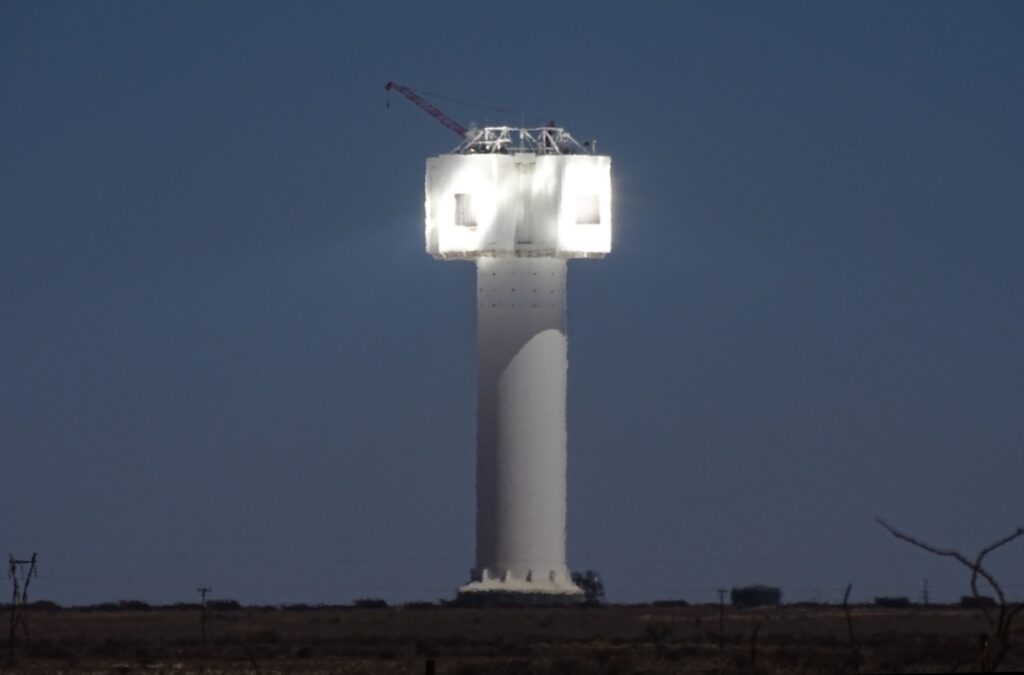
- Solar One seen from outside the plant (Kanoneiland). This file is licensed under the Creative Commons Attribution-Share Alike 3.0 Unported license. Author Franz Reinisch.
Research: Technical assistance and cross-referencing provided by X’s xAi Grok, Anthropic’s Claude and Google’s Gemini Ai model.
- Editorial: All case study data, circuit designs, and final editorial decisions are the sole responsibility of the author to ensure technical accuracy.


As an Amazon Associate, Parts-Ring earns from qualifying purchases.